Why Weather Changes Everything Behind the Wheel
Most drivers learned to operate a vehicle in dry, daylight conditions - and that's where their instincts are calibrated. Rain, snow, and fog don't just make driving uncomfortable; they fundamentally alter the physical relationship between your tires and the road, and they shrink the time and distance you have to react to anything ahead.
The habits that work fine on a clear day can get you into serious trouble when conditions change. Understanding why each weather type behaves differently helps you adapt with purpose instead of guessing. This isn't about driving scared - it's about driving informed.
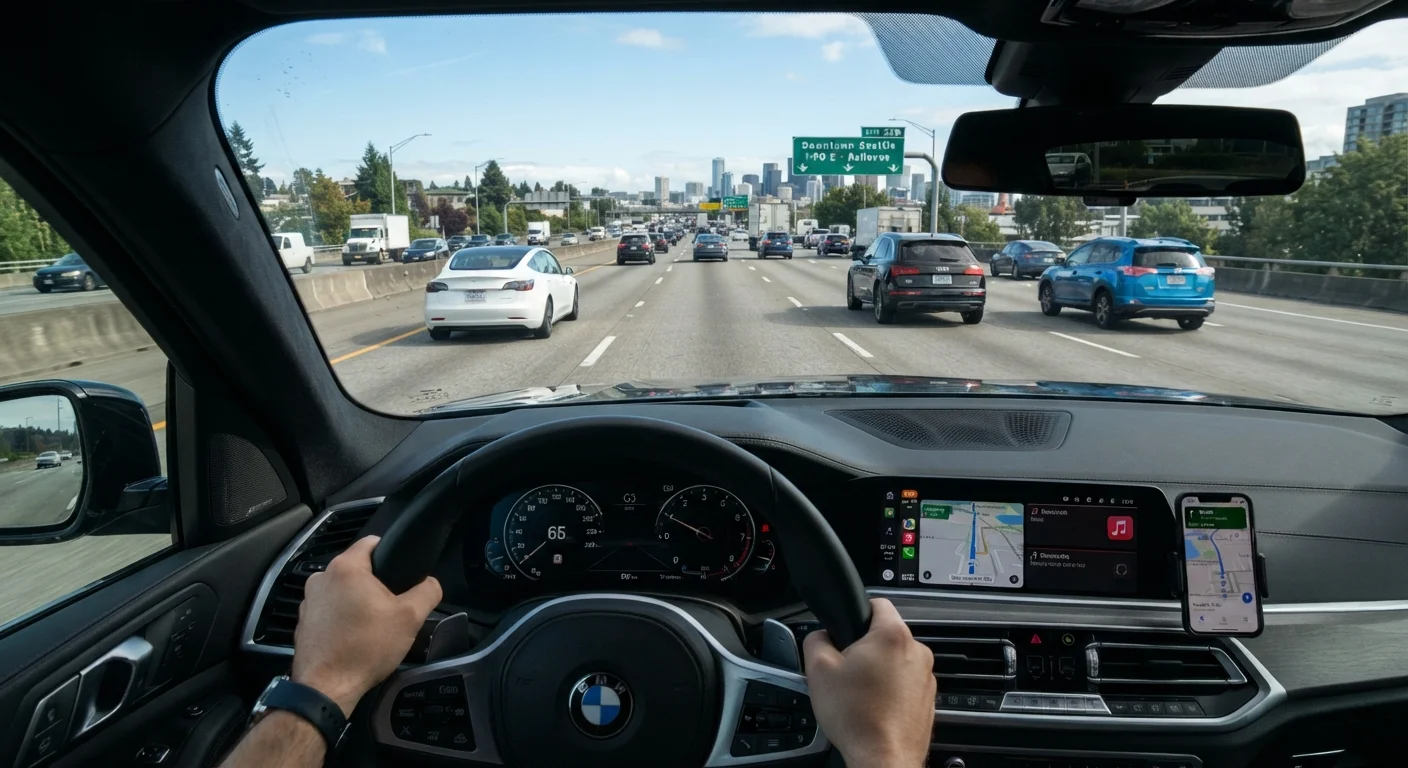
For a broader foundation on anticipating hazards before they develop, see our guide to defensive driving.
Driving in Rain: Traction, Hydroplaning, and Following Distance
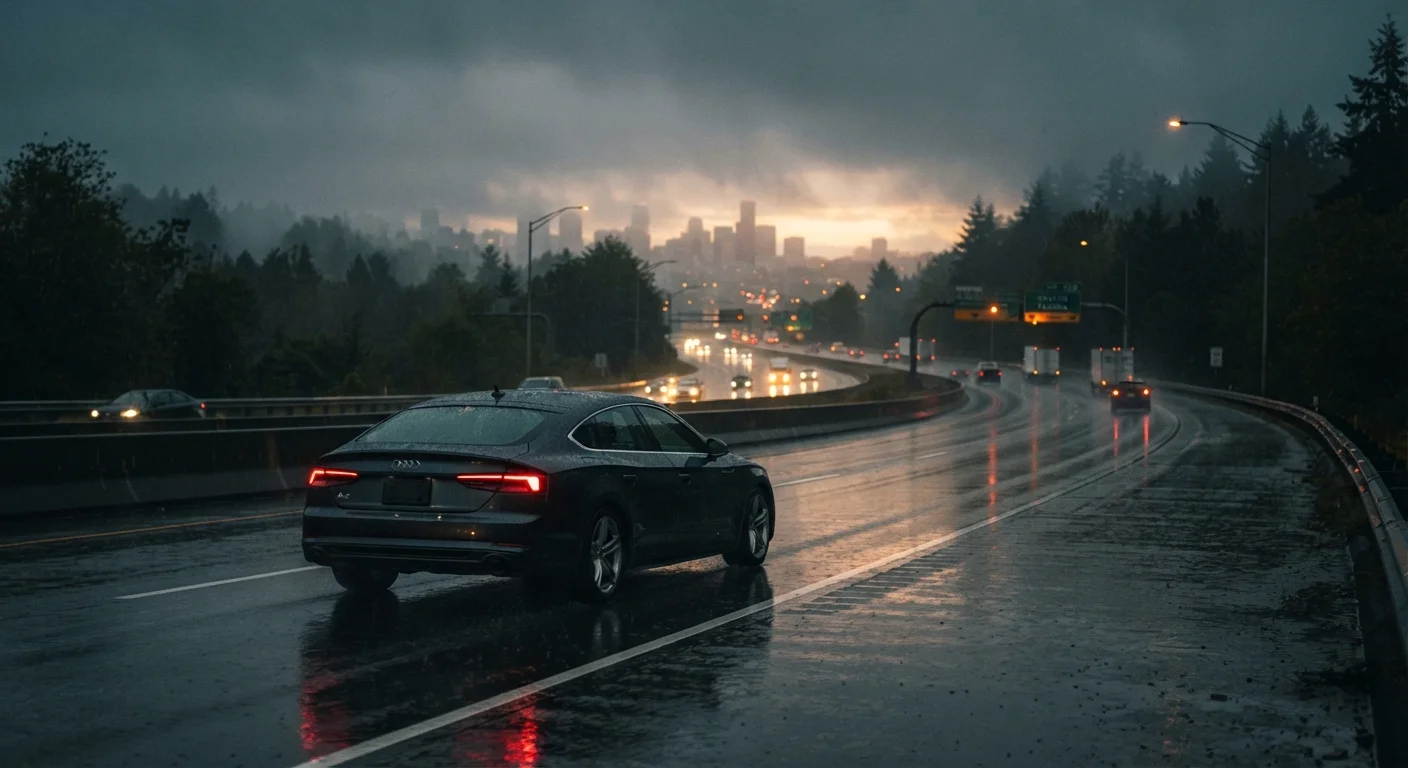
Rain is the most common adverse condition American drivers face, and also the most underestimated. Water sitting on pavement dramatically reduces the friction your tires depend on to grip the road. At highway speeds on wet roads, your tires can lose contact with the surface entirely - a phenomenon called hydroplaning - causing steering and braking to become temporarily ineffective.
Reduce speed well below the posted limit on wet roads
Speed limits are set for dry conditions. Wet pavement requires longer stopping distances, and hydroplaning risk increases sharply above 45 mph on rain-covered roads. Slowing down gives your tires time to channel water and maintain traction.
Double or triple your following distance in wet conditions
The standard 3-second following distance assumes dry roads and normal braking. Wet pavement can double your stopping distance, which means a 3-second gap becomes dangerously short. Increasing to 6 or more seconds provides a real safety margin.
Turn headlights on as soon as visibility drops - not when it's raining hard
Lights in rain aren't primarily about helping you see ahead - they make your vehicle visible to others. Many crashes in rainy conditions involve cars that are difficult to spot. Most states also legally require headlights when wipers are active.
Brake gently and well in advance on snow or ice
Sudden hard braking on slippery surfaces causes wheels to lock or ABS to activate, extending stopping distance and reducing steering control. Anticipating stops and applying light, progressive brake pressure keeps tires rolling and gives you directional control.
Use low-beam headlights - not high beams - in fog
High beams reflect off water droplets in fog and create a wall of glare that reduces forward visibility. Low beams direct light toward the road surface where it's useful. If your vehicle has dedicated fog lights, use those instead.
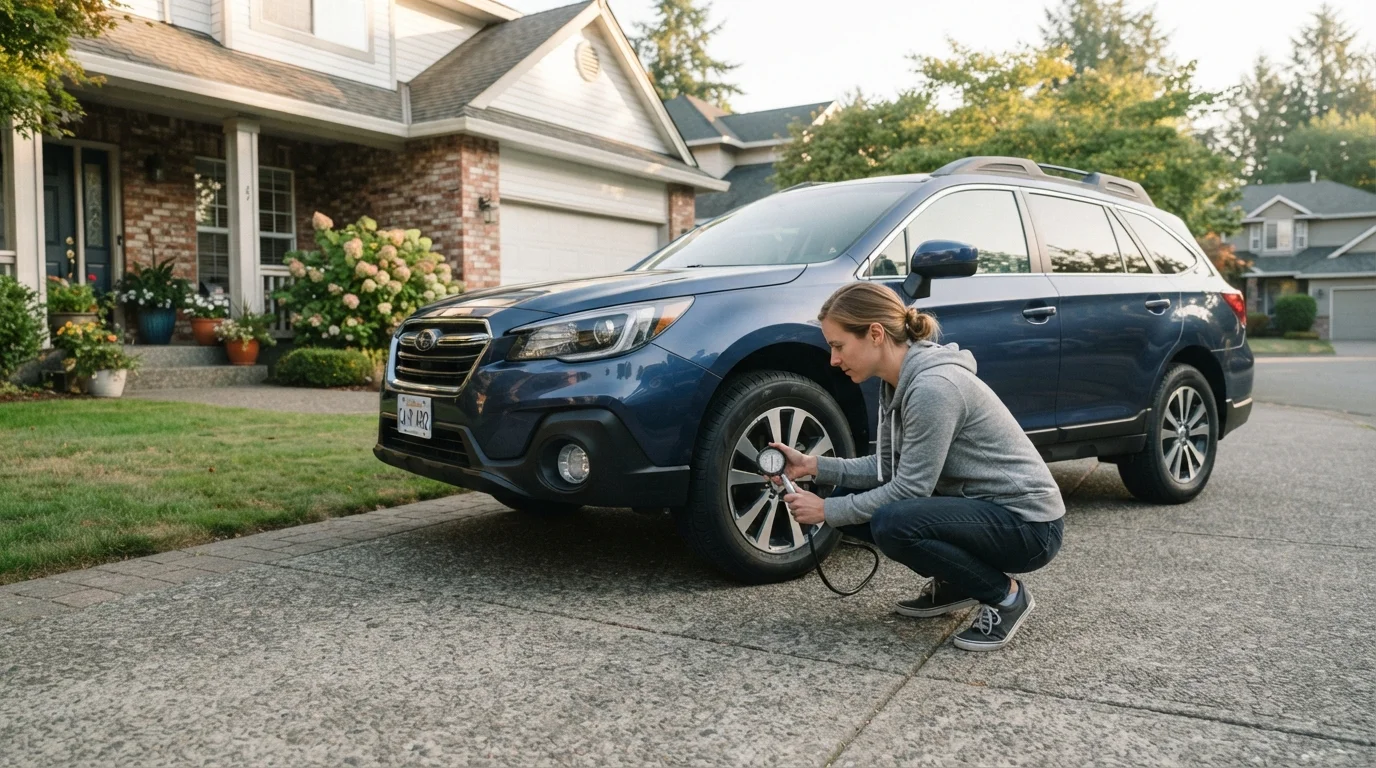
Tires in poor condition make all of this significantly worse. Worn tread cannot channel water away from the contact patch quickly enough. This is one reason checking your tires before any long drive is worth the five minutes it takes. The same principles apply any time heavy weather is in the forecast.
If you do hydroplane, ease off the accelerator smoothly - do not brake hard or jerk the wheel. Allow the car to slow naturally until tires regain contact.
Driving in Snow and Ice: Smooth Is Fast
Snow-covered and icy roads punish abrupt inputs. Hard braking locks wheels. Sharp steering inputs break traction and send the vehicle sliding. The guiding principle here is smoothness: gradual acceleration, gentle braking, and deliberate steering changes give tires the best chance to maintain grip.
~17%
Weather-related U.S. crash share involving snow or ice
According to the Federal Highway Administration, approximately 17% of all weather-related vehicle crashes occur on snowy, slushy, or icy pavement annually.
10x
Potential increase in stopping distance on ice vs. dry pavement
Safety researchers have documented that stopping distances on ice can be up to ten times longer than on dry roads at the same speed, depending on tire type and temperature.
70%
Weather-related U.S. crashes tied to wet pavement
The Federal Highway Administration reports that around 70% of weather-related crashes occur on wet pavement, making rain the most dangerous weather condition by volume.
All-wheel drive and traction control help you accelerate on slippery surfaces, but they do little to help you stop or steer. Drivers with AWD vehicles sometimes overestimate their safety margin on snow and ice - a dangerous assumption. Stopping distance on ice can be ten times longer than on dry pavement.
Black ice - a thin, nearly invisible layer of ice - typically forms on bridges, overpasses, and shaded roadway sections even when surrounding roads appear clear. If your car suddenly feels unusually quiet and light, suspect black ice and ease off the gas without braking.
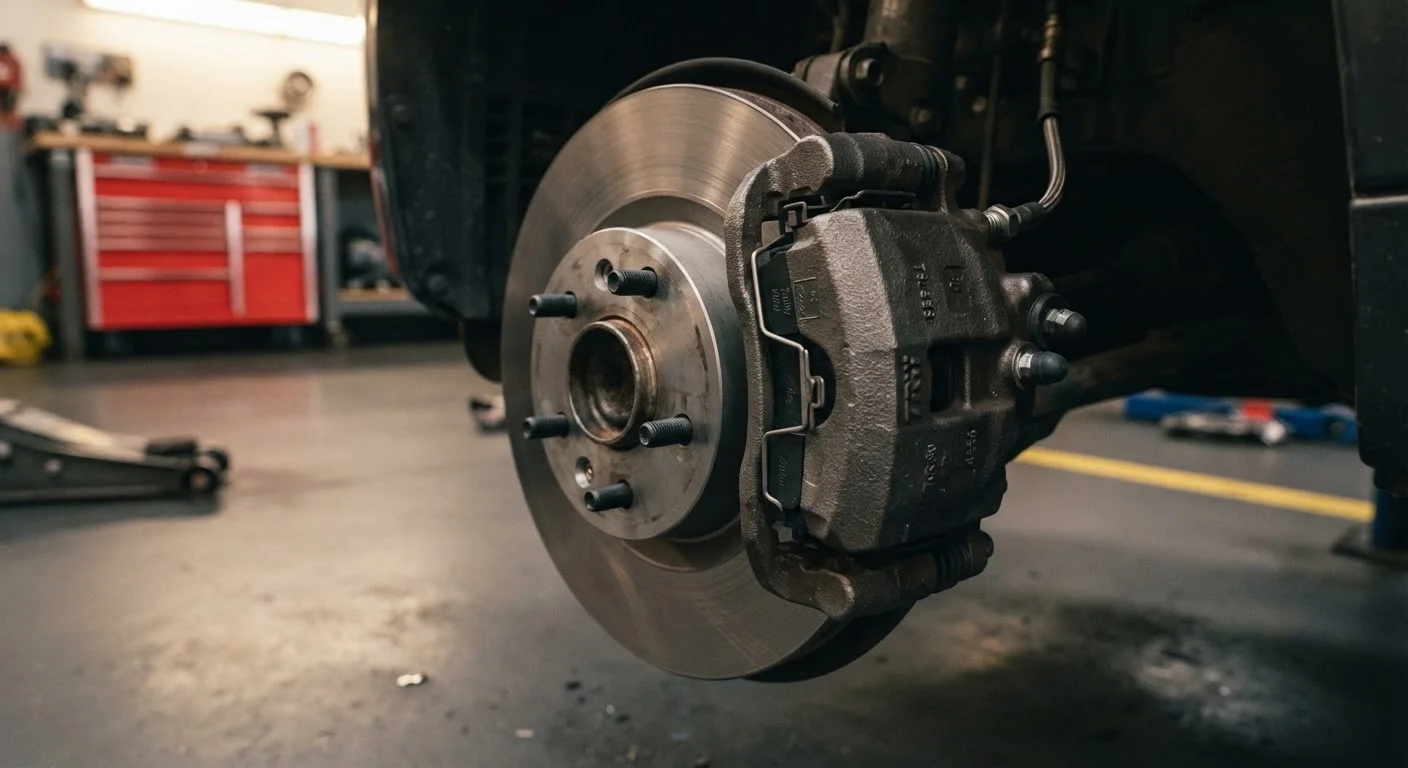
Good braking habits year-round are directly relevant to winter safety. Our guide to brake maintenance covers what to check before the cold season arrives.
Driving in Fog: Seeing and Being Seen
Fog reduces visibility to a fraction of normal range and distorts depth perception - distances appear greater than they actually are. The instinct to switch on high beams backfires: the light reflects off water droplets and creates glare that makes visibility worse, not better. Low beams (or dedicated fog lights if your vehicle has them) direct light downward and forward more effectively.
In Fog: Low Beams and Patience
Resist the urge to use high beams in fog - the reflected glare will reduce your visibility, not improve it. Use low beams and drive at a speed where you could stop within the distance you can see. If you can't make out road markings clearly, you're moving too fast for conditions.
Speed is the most critical adjustment in fog. You should be able to stop completely within the distance you can see ahead - a principle sometimes called driving within your sight distance. If you can only see 100 feet ahead, you cannot safely travel at highway speeds.
Pull off the road entirely if fog becomes truly impenetrable. Turn on your hazard lights, pull as far off the roadway as possible, and wait. Being a stationary obstacle on an active roadway is dangerous, but attempting to navigate in near-zero visibility is more so.
“The road doesn't care how experienced you are. In reduced visibility, the only thing that matters is whether you've given yourself enough time and space to respond.”
— National Safety Council, U.S. nonprofit organization focused on road safety and injury prevention
Quick Adjustments You Can Make Before You Drive
Preparation before you leave the driveway often matters as much as how you drive once you're on the road. Give yourself extra time so schedule pressure doesn't push you into taking risks. Clear all snow and ice from your entire vehicle - not just the windshield - including the roof, hood, and lights.
Check that all lights are functioning and that your defroster works before bad-weather seasons arrive. These aren't dramatic measures - they're the kind of practical habits that compound into significantly safer driving over time, the same way defensive driving habits protect you by reducing exposure to risk before incidents develop.