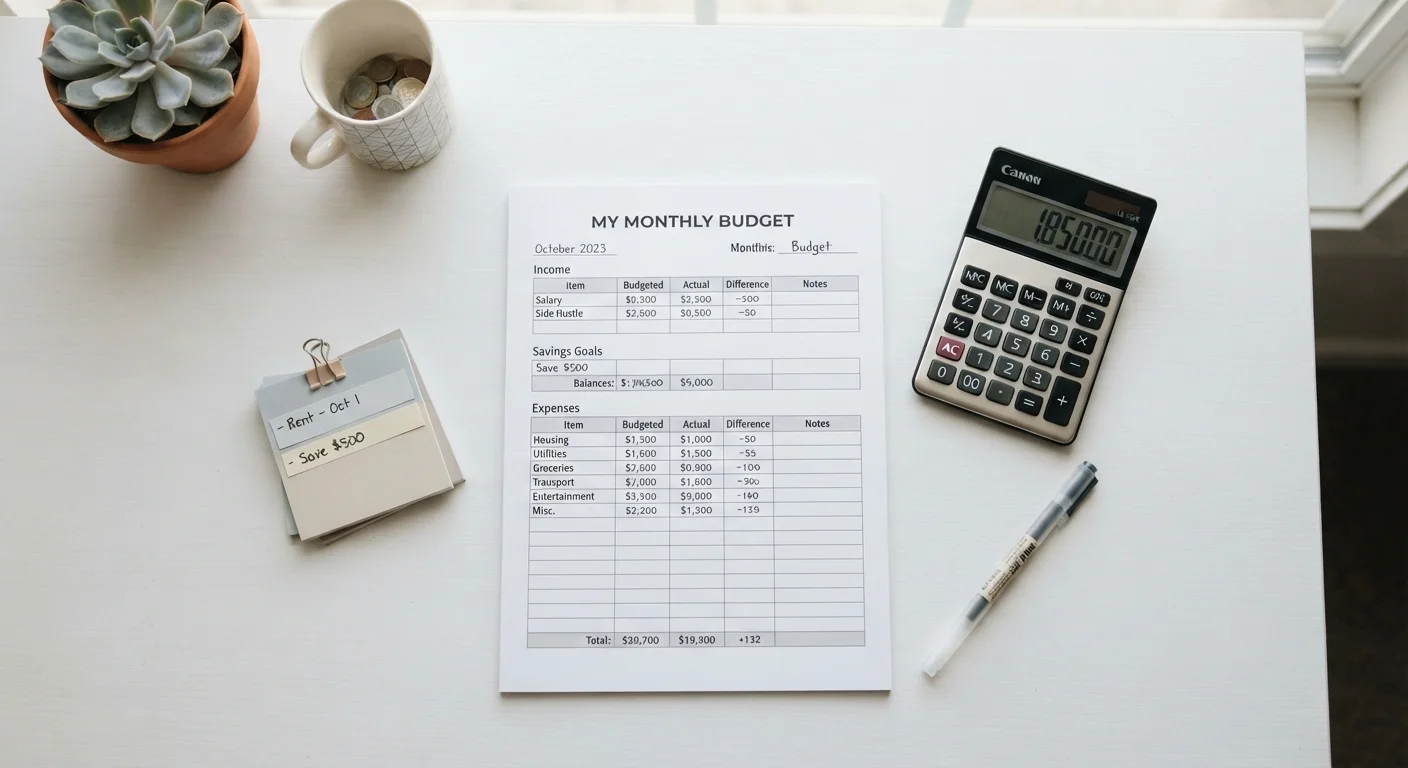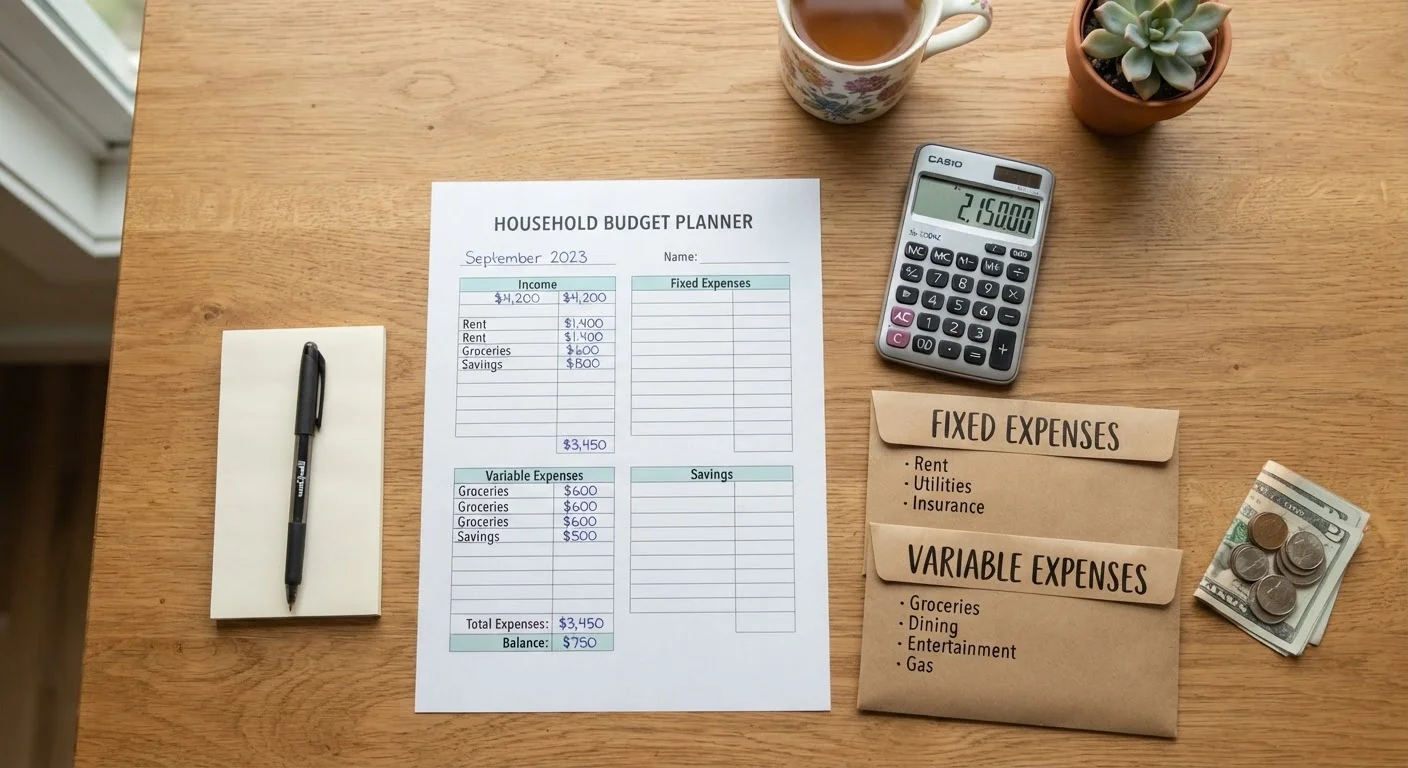
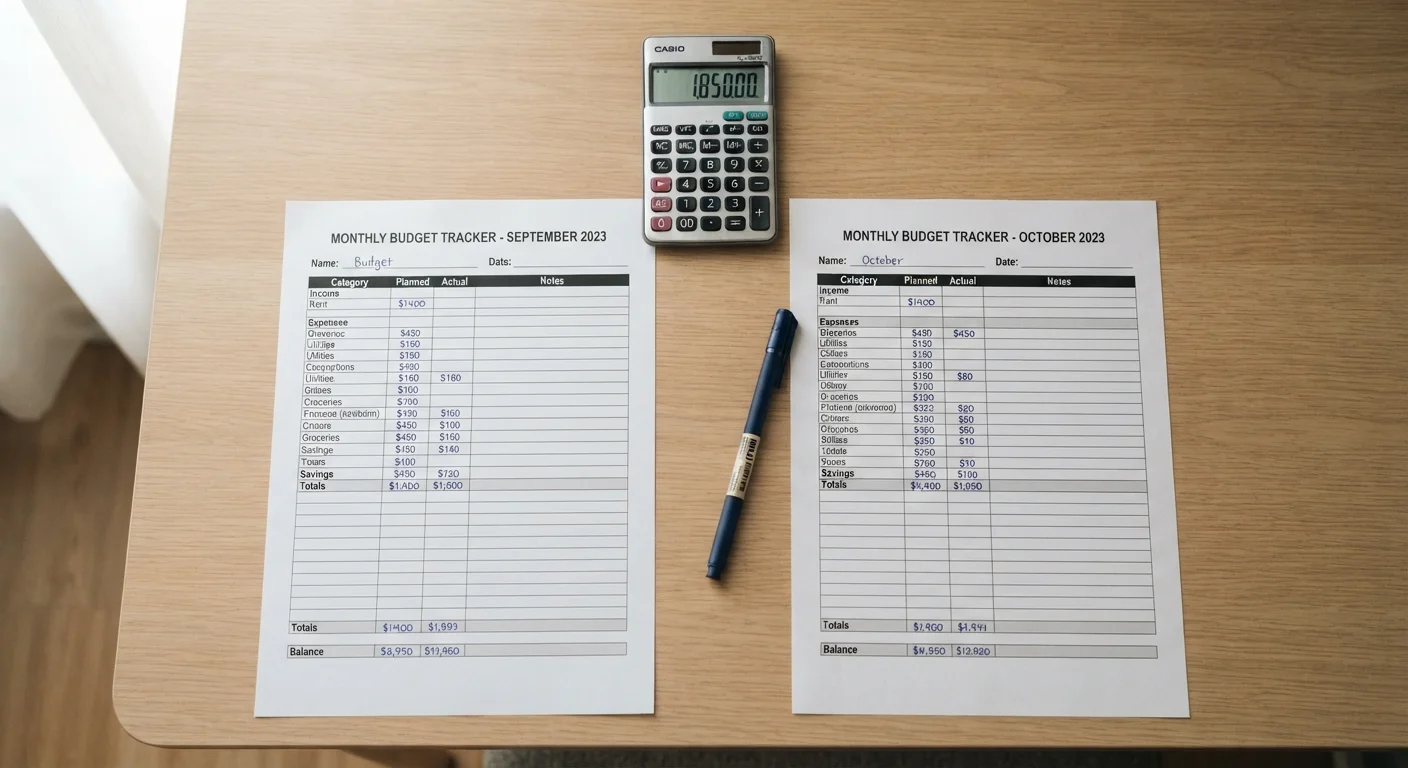
How Each Method Works
Understanding the mechanics of each framework is the starting point. Both methods are tools for allocating income - they just operate on different logic.
Zero-based budgeting (ZBB) begins with your total take-home income for the month. You then assign every dollar to a specific category - rent, groceries, transportation, savings, debt repayment - until your income minus all allocations equals zero. That zero doesn't mean you've spent everything; it means nothing is unaccounted for. Money assigned to savings is still saving; money assigned to an emergency fund is still there. The goal is intentionality, not depletion.
Percentage-based budgeting works differently. You divide income into broad buckets based on fixed ratios. The widely referenced 50/30/20 rule - 50% toward needs, 30% toward wants, and 20% toward savings and debt - is one common example, though the specific percentages vary by framework. Rather than itemizing individual expenses, you track whether your spending in each bucket stays within its designated share. For a deeper look at terminology underlying both approaches, the budget glossary covers key concepts like discretionary income and expense ratios.
| Criterion | Zero-Based Budgeting | Percentage-Based Budgeting |
|---|---|---|
| Core principle | Every dollar assigned a purpose | Income split into fixed category ratios |
| Monthly setup effort | High - rebuilt each month | Low - ratios stay constant |
| Flexibility for irregular income | High - based on actual income | Lower - ratios assume stable base |
| Spending visibility | Granular, line-by-line | Broad, category-level |
| Best for debt payoff | Yes - precise redirection of funds | Partial - depends on savings % |
| Ease for beginners | Steeper learning curve | Simpler starting point |
| Common failure point | Time burden causes abandonment | Broad buckets hide overspending |
Where Each Method Excels - and Where It Struggles
No budgeting method is without trade-offs. Knowing the failure points of each helps you choose the one you're more likely to sustain.
Zero-based budgeting excels when you need surgical precision - it's especially effective for people working through debt, building an emergency fund on a tight income, or recovering from a period of financial drift. The discipline of rebuilding the budget monthly also means it self-corrects: a particularly high-expense month gets addressed at the start of the next one. The drawback is time. Itemizing dozens of categories monthly requires consistent effort, and many people abandon it when life gets busy. Understanding which of your expenses are fixed versus variable makes zero-based budgeting significantly easier to construct each month.
Percentage-based budgeting shines in its simplicity. Once you've set your ratios, the monthly task is tracking category totals - not rebuilding from scratch. It suits people with relatively predictable expenses and stable income. Where it struggles is flexibility: a month with an unexpected car repair or medical bill can blow a percentage cap without an obvious place to rebalance. The broad categories can also mask overspending within them - your "needs" bucket might technically stay at 50%, while individual line items inside it are quietly out of control.
Neither Method Requires Perfection
Both zero-based and percentage-based budgeting allow for adjustments mid-month when unexpected expenses arise. A budget that gets tweaked and maintained is more effective than a theoretically perfect one that gets abandoned. Many experienced budgeters start with a percentage-based framework for simplicity, then layer in zero-based discipline once the habit is established.
For those new to either method, the ground-up monthly budget walkthrough offers a practical starting framework before committing to either system long-term.
Choosing the Right Framework for Your Situation
The best budgeting method is the one you'll actually maintain. That's not a platitude - it's borne out by the reality that most budget breakdowns happen not in the first week, but weeks later, when friction accumulates. The reasons budgets typically fail in month two often trace back to choosing a system that doesn't match the person's lifestyle or capacity for ongoing effort.
~77%
Americans living paycheck to paycheck at some point
Federal Reserve surveys have consistently found a large share of U.S. adults would struggle to cover an unexpected $400 expense from savings alone, underscoring the value of deliberate budgeting.
50/30/20
Most commonly cited percentage split
The 50/30/20 rule - allocating 50% to needs, 30% to wants, and 20% to savings or debt - is widely referenced in personal finance education as a starting ratio, though individual circumstances vary.
If you have an irregular income - freelance work, hourly shifts, seasonal employment - zero-based budgeting adapts more naturally, since you're always building from actual dollars received rather than applying ratios to an assumed number. If your income is salaried and consistent, either method can work, and the choice comes down to your preference for control versus convenience.
For households managing shared finances, the structure of each method also affects how partners track and communicate about spending. The household budgeting guide explores how couples and housemates can apply either framework collaboratively. Regardless of which method you choose, connecting your budget to broader goals - including saving and debt reduction - gives both systems their real-world purpose.
This article is for general informational and educational purposes only and does not constitute personalised financial advice. Consult a qualified financial professional for guidance tailored to your individual circumstances.