
Why These Misunderstandings Are So Costly
Most people buy insurance hoping they'll never need it - and that optimism can lead to skimming the fine print. The result is a gap between what policyholders think they have and what they actually purchased. That gap tends to become visible at the worst possible moment: after a loss, when a claim is already filed.
Understanding what each policy type actually covers isn't just an academic exercise. It's a practical skill that helps you evaluate whether your current coverage fits your situation. The myths below are among the most widespread - and the most financially consequential. For a deeper foundation, see the plain-language glossary of common insurance terms that covers the jargon most likely to trip you up.
Myth
My homeowners insurance covers damage from floods and earthquakes.
Fact
Standard homeowners policies exclude both flood and earthquake damage. These perils require separate, standalone policies.
This is one of the costliest misunderstandings in personal insurance. A standard homeowners policy covers a defined list of named perils - events like fire, windstorm, theft, and certain water damage (such as a burst pipe). Flooding caused by rising water from outside the home and ground movement from earthquakes are almost universally excluded.
Flood coverage in the U.S. is largely available through the National Flood Insurance Program (NFIP) or select private insurers. Earthquake coverage is typically purchased as a separate policy or endorsement. Homeowners in flood-prone or seismically active areas should evaluate these gaps carefully. See common coverage gaps in standard policies for more on what homeowners policies leave out.
Myth
Renters insurance covers damage to the building I rent if something goes wrong.
Fact
Renters insurance covers your personal belongings and liability - not the physical structure, which is the landlord's responsibility to insure.
Renters insurance and building coverage serve entirely different purposes. Your landlord carries a property insurance policy on the physical structure - the walls, roof, and built-in fixtures. Your renters policy covers your personal property (furniture, electronics, clothing) against covered perils, and typically includes personal liability coverage if someone is injured in your unit.
If the building is damaged by fire, for example, your landlord's policy addresses structural repairs. Your renters policy would address replacing your damaged belongings - assuming the cause of loss is covered under your specific policy. Always check what perils your renters policy names and what it excludes.
Myth
My auto insurance covers my medical bills and car repairs after any accident.
Fact
Whether your own bills are covered depends on the type of coverage you carry - liability-only policies cover damage you cause to others, not your own vehicle or injuries.
Auto insurance is often purchased as a bundle of distinct coverages, and which ones you've selected matters enormously after a crash. Liability coverage - the minimum required in most states - pays for injuries and property damage you cause to other people. It does not pay to repair your car or cover your own medical costs.
To cover your own vehicle, you typically need collision coverage (for accident damage) and comprehensive coverage (for theft, weather, and non-collision events). For your own medical expenses, personal injury protection (PIP) or medical payments (MedPay) coverage must be present on the policy. These are often optional add-ons depending on your state. Reviewing your declarations page tells you exactly which coverages are active on your policy. For help decoding the terminology, see insurance terms that look similar but mean very different things.
Myth
Health insurance pays for all medical care once I've met my deductible.
Fact
Meeting your deductible means cost-sharing begins, but out-of-pocket costs continue until you reach your plan's out-of-pocket maximum - and some services may be excluded entirely.
The deductible is the amount you pay out-of-pocket before your insurance begins sharing costs. After you meet it, you typically pay coinsurance (a percentage of covered costs) or a copay (a flat fee per service) until you reach the plan's out-of-pocket maximum. After that threshold, the plan generally pays 100% of covered services for the rest of the plan year.
The critical word is covered. Services that are excluded from the plan - such as certain elective procedures, non-formulary medications, or out-of-network care in some plan types - may not count toward your deductible or maximum at all. How health insurance actually works provides a thorough breakdown of plan structures and cost-sharing mechanics.
Myth
Life insurance payouts are always taxable income for whoever receives them.
Fact
Life insurance death benefits paid to a named beneficiary are generally not subject to federal income tax, though other tax considerations may apply.
Under U.S. tax law, death benefits received by a beneficiary from a life insurance policy are typically excluded from gross income for federal income tax purposes. This is one of the more favorable tax treatments available to consumers. However, generally excluded from income tax does not mean free from all tax considerations.
If the death benefit is included in the insured's taxable estate and the estate exceeds federal or state estate tax thresholds, estate taxes may apply. Additionally, if a policy is surrendered for its cash value rather than paid as a death benefit, the gain portion may be taxable. For questions about how life insurance fits into an individual's tax and estate plan, consulting a licensed financial adviser or tax professional is advisable.
Where Confusion Is Most Likely to Lead to a Denied Claim
Misconceptions don't just leave people underinsured - they can lead to claim denials that feel sudden and unfair but are firmly grounded in the policy language. Insurers are bound by the terms in the contract, not by what a policyholder assumed was covered.
~60%
Homeowners unaware flood isn't covered
Surveys by insurance industry research groups have consistently found that a substantial share of homeowners believe flood damage is included in their standard policy - when it is not.
1 in 4
Workers who will face a disability before retiring
According to the Social Security Administration, approximately one in four of today's 20-year-olds will experience a disability lasting 90 days or more before reaching retirement age - yet disability insurance remains widely overlooked.
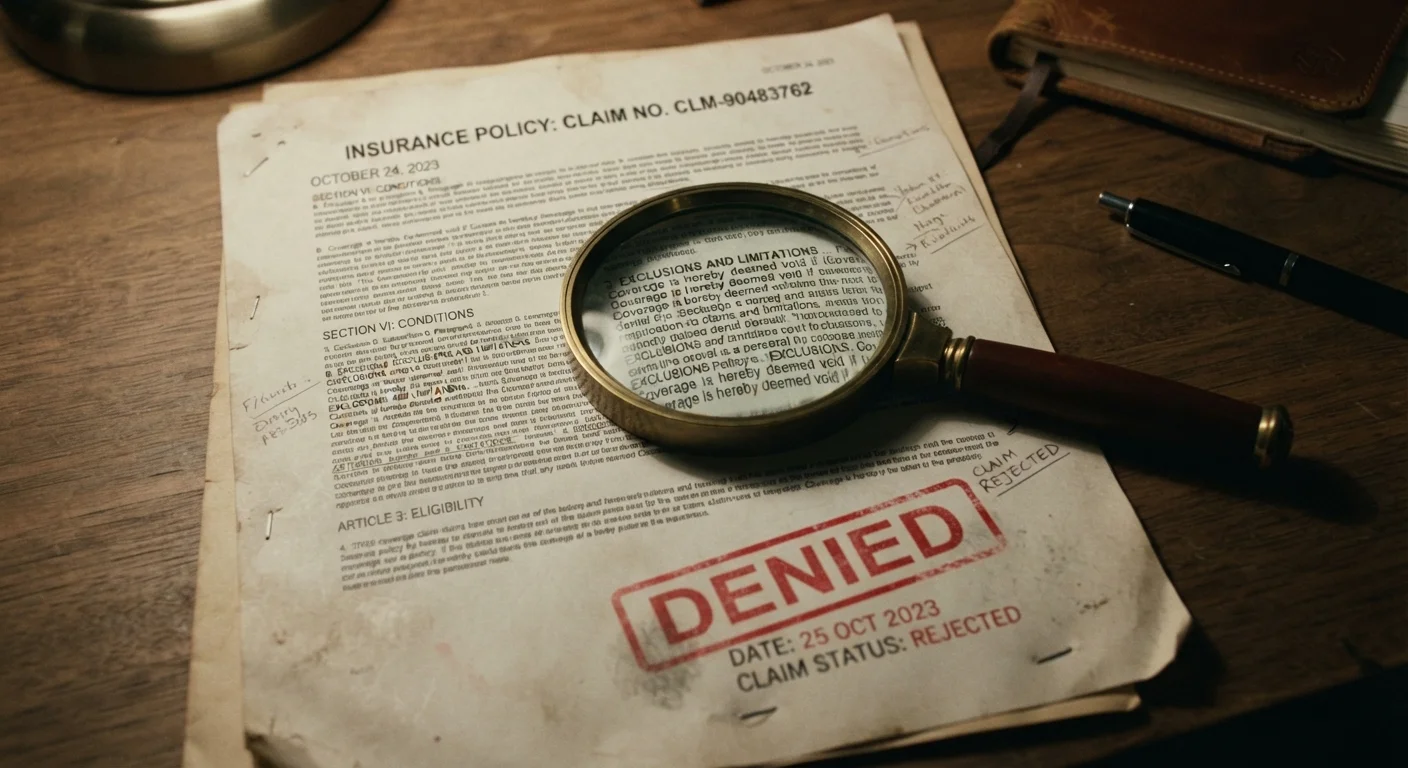
The most common trigger for a denial is a coverage exclusion that the policyholder never read or didn't understand. Exclusions are specific situations, perils, or property types that a policy explicitly does not cover. They are listed in the policy document itself - usually in a dedicated section - and reviewing them carefully before a loss occurs is the most reliable way to avoid surprises. Our article on why insurance claims get denied and what the fine print usually says walks through the most common denial reasons in detail.
Don't Wait Until a Claim to Read Your Policy
Policy exclusions and coverage limits are written into the contract you agreed to when you purchased the policy. Insurers are legally entitled to deny claims that fall outside those terms, regardless of what you assumed was covered. Set aside time to read your declarations page and exclusions section now - before you ever need to file. If any language is unclear, a licensed insurance agent can explain what it means for your specific situation.
If you discover a gap in your coverage, there are often riders, endorsements, or separate policies that can address it. The right move is to review your declarations page and policy documents, then speak with a licensed insurance agent about your options. Coverage decisions should be based on your actual policy language and your individual circumstances - not general assumptions. For a closer look at coverage blind spots that may already exist in standard policies, see gaps most policyholders don't know they have.
This article provides general insurance information for educational purposes only and does not constitute personalized insurance, financial, or legal advice. Coverage terms, exclusions, and eligibility vary by provider and by state. Always read your actual policy documents and consult a licensed insurance agent or adviser for guidance specific to your situation.