
Why Insurance Myths Are More Costly Than They Seem
Insurance policies are legal contracts, and what the document actually says governs what gets paid - not what seemed reasonable to assume. Misconceptions about coverage are widespread, and many go uncorrected until a claim is already in motion. The result is that policyholders face unexpected out-of-pocket costs precisely when they can least afford them.
The myths below represent the most consequential misunderstandings consumers carry about their policies. Each one touches on a core concept - exclusions, valuation, cost-sharing, or coverage scope - that determines real financial outcomes. See also our overview of the how insurance coverage and claims actually work for foundational context.
Assuming Coverage Exists Can Be Costly
Many consumers discover coverage gaps only after filing a claim - when it is too late to adjust the policy. Never assume a loss is covered based on what seems reasonable; always read your policy's declarations page and exclusions section. When in doubt, contact a licensed insurance agent to clarify what is and is not included before a loss occurs.
Common Insurance Myths, Corrected
The following myth-and-fact pairs address the misunderstandings most likely to leave consumers underprotected. Each one involves language or logic that appears in actual policy documents - so understanding the correction helps you read any policy more confidently.
Myth
My homeowners insurance covers flood damage, so I don't need a separate flood policy.
Fact
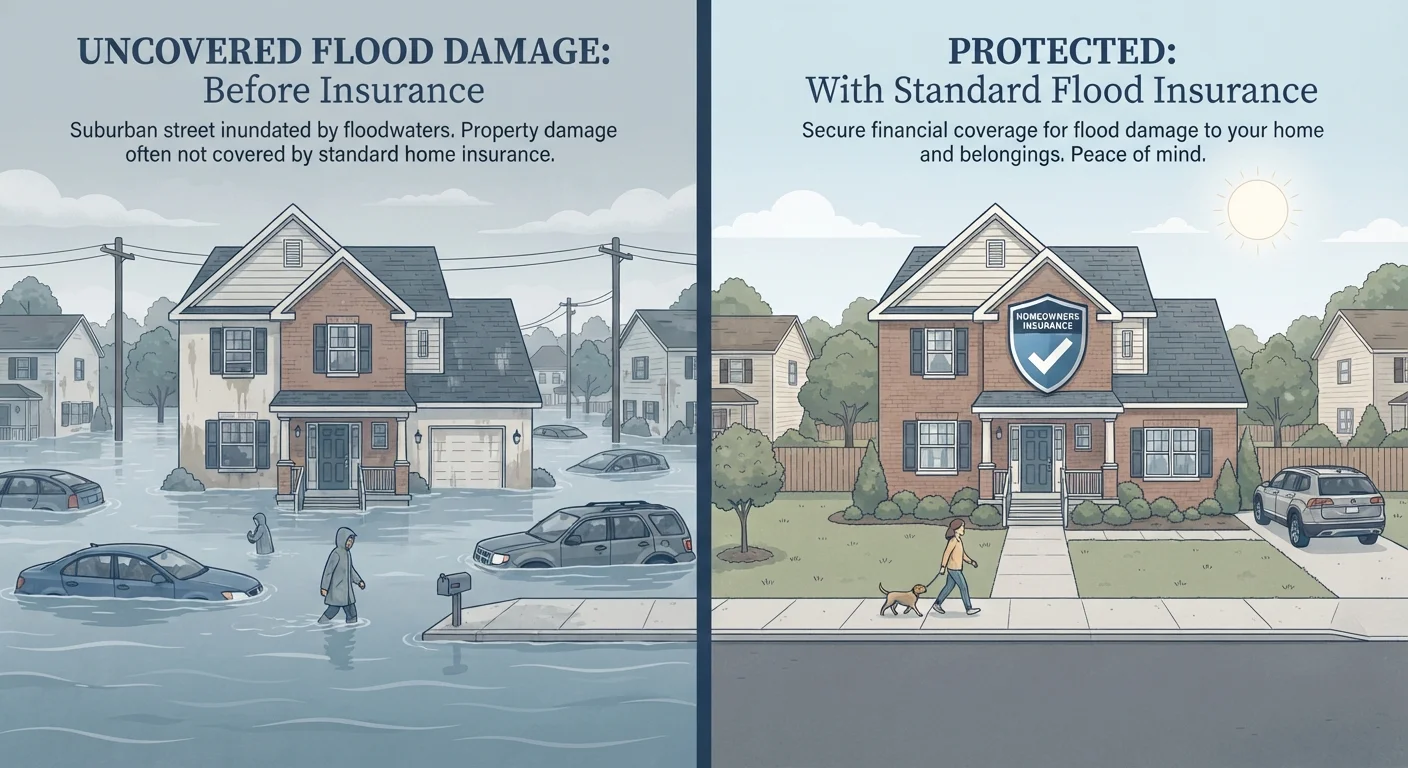
Standard homeowners policies explicitly exclude flood damage. A separate flood insurance policy is required to cover losses from rising water.
This is one of the most financially damaging myths in personal insurance. Standard homeowners policies cover water damage caused by a sudden internal event - such as a burst pipe - but they draw a clear line at flooding caused by external water sources, including heavy rain, storm surge, overflowing rivers, or snowmelt. Homeowners in both high-risk and moderate-risk flood zones are often surprised to learn this distinction only after a storm. Separate flood coverage is available through federal programs and some private carriers. For a full breakdown, see why flood insurance and homeowners insurance are not the same thing.
Myth
If I'm a renter, the landlord's insurance will cover my belongings if something goes wrong.
Fact
A landlord's insurance policy covers the building structure, not a tenant's personal property. Renters need their own policy to protect their possessions.
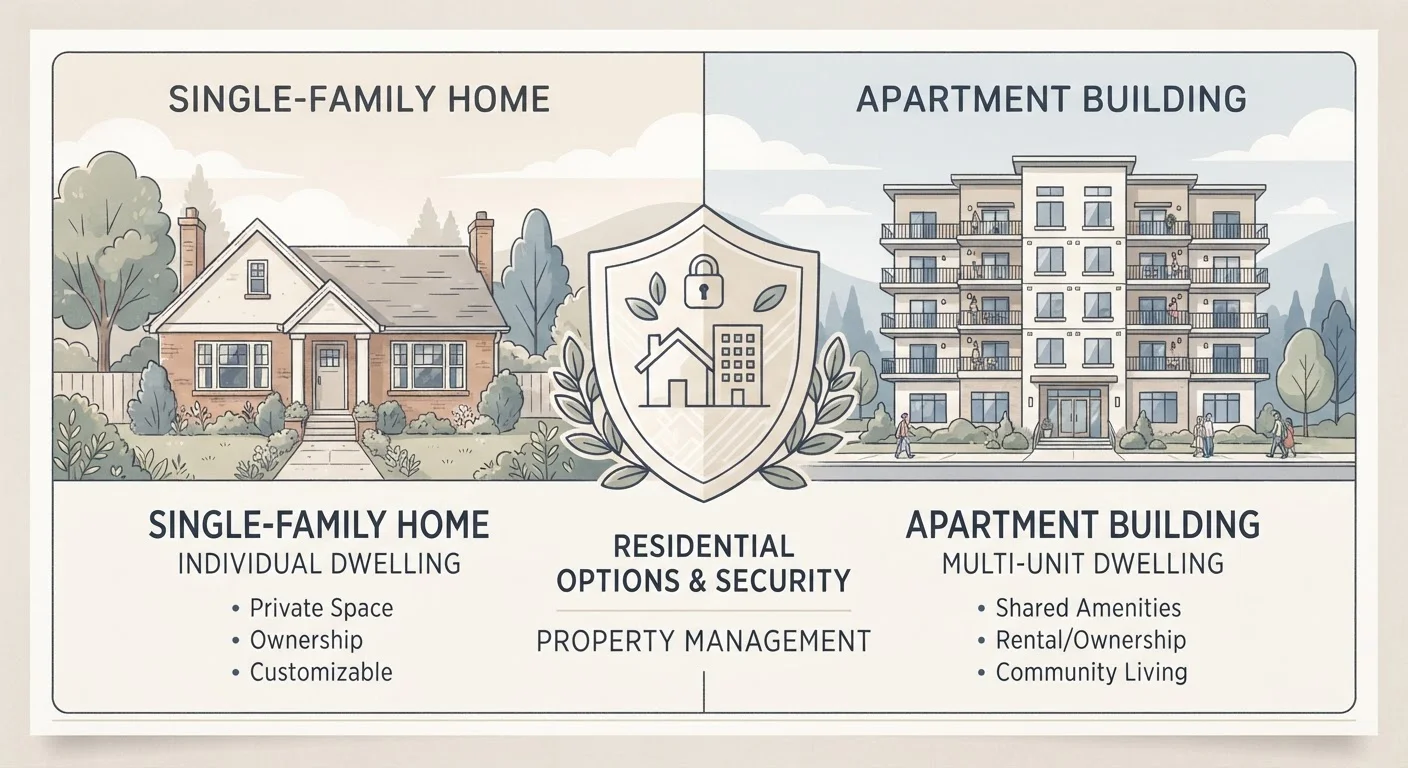
Landlord insurance is designed to protect the property owner's financial interest in the building itself - walls, roof, fixtures, and liability related to the structure. It provides no protection for a tenant's furniture, electronics, clothing, or other belongings. A renters insurance policy fills this gap, typically at a modest annual cost, and usually includes personal liability coverage as well. Understanding the distinction between these two policy types is essential for anyone who rents their home. Homeowners and renters insurance protect very different interests - even though both involve the same physical space.
Myth
A lower monthly premium always means I'm spending less on insurance overall.
Fact
Premium and total out-of-pocket cost are different things. A lower premium often comes with a higher deductible, meaning you pay more when you file a claim.
The premium is what you pay periodically to keep a policy active. The deductible is the amount you must pay out of pocket before the insurer begins paying a covered claim. These two numbers move in opposite directions: choosing a lower premium generally means accepting a higher deductible. If you rarely file claims, a high-deductible plan may work in your favor. But if you face a covered loss, the savings in premium could quickly be erased. Always calculate the realistic total cost - premium plus potential deductible - before deciding a plan is the most cost-effective option. For more on terms that interact in counterintuitive ways, see insurance terms that look similar but mean very different things.
Myth
Red cars cost more to insure than cars of other colors.
Fact
Vehicle color has no effect on insurance premiums. Insurers price auto policies based on the vehicle's make, model, age, safety record, and the driver's history.
This myth is remarkably persistent, but no major insurer uses vehicle color as a rating factor. What actually drives auto insurance pricing includes the car's year, make, and model; its safety ratings and theft statistics; the driver's age, driving record, and claims history; and the geographic area where the vehicle is garaged. When you apply for coverage, insurers typically ask for your Vehicle Identification Number (VIN) - not the color. For a broader look at how auto coverage fits into car ownership costs, see how auto insurance fits into the bigger picture of car ownership.
Myth
My insurance covers the full replacement value of my home's contents automatically.
Fact
Many standard policies default to actual cash value (ACV) for personal property, which factors in depreciation. Replacement cost coverage is often a separate, optional add-on.
There is an important difference between actual cash value (ACV) and replacement cost value (RCV). ACV pays what your belongings were worth at the time of loss, after depreciation is applied. A five-year-old laptop that cost $1,200 new might be valued at only a few hundred dollars under ACV. Replacement cost coverage, by contrast, pays what it would cost to buy a comparable new item today. Policyholders who assume they are fully covered are often surprised by how much depreciation reduces a claim payout. Check your declarations page to see which basis applies to your personal property, and ask your agent about endorsements that upgrade coverage if needed. You can also review coverage gaps most policyholders don't know they have.
Myth
Once you have health insurance, all medical services are covered.
Fact
Every health insurance policy contains exclusions, network restrictions, and cost-sharing requirements that limit what is actually covered.
Health insurance does not function as blanket coverage for every medical expense. Policies include a defined network of providers - seeing an out-of-network provider can result in significantly higher costs or no coverage at all. Additionally, policies list specific exclusions (services not covered), require prior authorization for certain procedures, and impose cost-sharing through deductibles, copayments, and coinsurance. Even after a deductible is met, the insured may still owe a percentage of costs up to an out-of-pocket maximum. Always read the Summary of Benefits and Coverage (SBC) document before using services to understand what your plan actually covers. Consult a licensed insurance professional for guidance tailored to your situation. Plain-language definitions of the most confusing insurance terms can help decode this language.
~40%
Renters without renters insurance
Insurance Information Institute data has consistently shown that a large share of U.S. renters carry no personal property coverage, leaving belongings unprotected.
1 in 4
Homeowners in flood-prone areas uninsured for flood
FEMA has noted that a significant portion of homeowners in moderate- to high-risk flood zones do not carry separate flood insurance policies.
~60%
Underinsured homes in the U.S.
Industry research has found that a majority of insured homes are underinsured relative to their actual rebuilding cost, partly due to assumptions about automatic full coverage.
For a deeper look at the vocabulary that underpins these distinctions, the overview of major insurance categories provides useful context across policy types. If you are concerned about gaps specific to your situation, myths that cost people money when filing a claim explores what tends to go wrong at the claims stage.
Policy Documents Override Assumptions
If there is ever a conflict between what you believed your policy covered and what the document states, the written policy terms will govern any claim decision. Keep a copy of your full policy - including the exclusions and conditions sections - and review it whenever your circumstances change. If you find language you cannot interpret clearly, a licensed insurance agent or your state's insurance commissioner office can help clarify it.