The Core Difference: What's Actually Being Insured
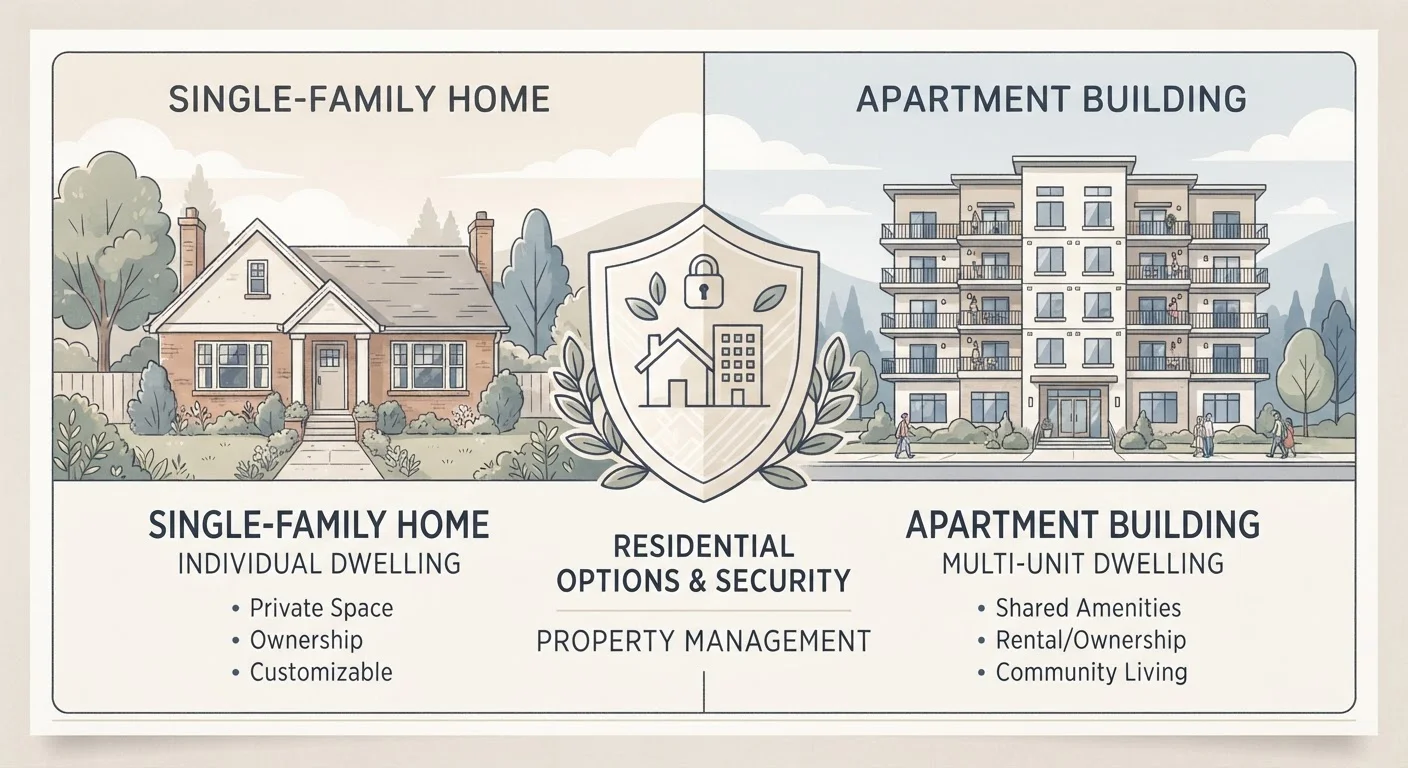
The most important distinction between homeowners and renters insurance comes down to one question: do you own the structure you live in? If yes, homeowners insurance is the policy built for your situation. If no, renters insurance is the appropriate fit.
Homeowners insurance protects the physical dwelling - the walls, roof, foundation, and attached structures like a garage - in addition to personal belongings and personal liability. Because the policyholder owns the property, their financial exposure is much larger, and the policy reflects that scope.
Renters insurance covers none of the building. The structure is the landlord's financial responsibility. What renters insurance does cover is the tenant's personal property inside the unit, along with liability protection. This narrower scope is why renters insurance is generally less expensive than homeowners coverage.
For a broader look at how these fit into the landscape of coverage types, see The Major Insurance Categories Every American Should Recognize.
| Criterion | Homeowners Insurance | Renters Insurance |
|---|---|---|
| Who it's for | Property owners | Tenants / renters |
| Covers the building structure | Yes | No |
| Covers personal belongings | Yes | Yes |
| Personal liability coverage | Yes | Yes |
| Loss of use coverage | Yes | Yes |
| Covers flood damage (standard) | No | No |
| Typical premium range | Generally higher | Generally lower |
| Required by lender or landlord | Often required by mortgage lender | Sometimes required by landlord |
What Each Policy Typically Covers
Understanding the standard components of each policy helps you evaluate what you're actually getting. Both policies share some coverage categories but diverge significantly in others.
Homeowners Insurance Coverage Areas
- Dwelling coverage: Repairs or rebuilds the home's structure if damaged by a covered peril (fire, wind, hail, etc.).
- Other structures: Covers detached garages, fences, or sheds on the property.
- Personal property: Replaces belongings such as furniture, electronics, and clothing if damaged or stolen.
- Loss of use: Pays additional living expenses if the home becomes uninhabitable due to a covered loss.
- Personal liability: Covers legal costs and damages if someone is injured on your property or you cause damage to others.
- Medical payments: Covers minor medical bills for guests injured on your property, regardless of fault.
Renters Insurance Coverage Areas
- Personal property: Covers the tenant's belongings against covered perils like theft, fire, or vandalism.
- Loss of use: Pays for temporary housing if the rental unit becomes uninhabitable.
- Personal liability: Provides coverage if the tenant is legally responsible for injury or property damage.
- Medical payments: Covers minor injuries to guests, similar to homeowners policies.
~57%
U.S. renters with renters insurance
According to the Insurance Information Institute, roughly 57% of renters in the U.S. carry renters insurance, leaving millions without personal property protection.
~93%
U.S. homeowners with homeowners insurance
The Insurance Information Institute estimates that approximately 93% of homeowners carry homeowners insurance, often driven by mortgage lender requirements.
One common misconception is that a landlord's insurance covers tenant belongings - it does not. The landlord's policy protects the building; only the tenant's own renters policy protects their possessions. This is a point covered in detail in our article on Insurance Myths That Can Leave You Underprotected.
Shared Exclusions and Important Gaps
Despite their differences, homeowners and renters insurance share several notable exclusions that consumers should understand before assuming they're fully covered.
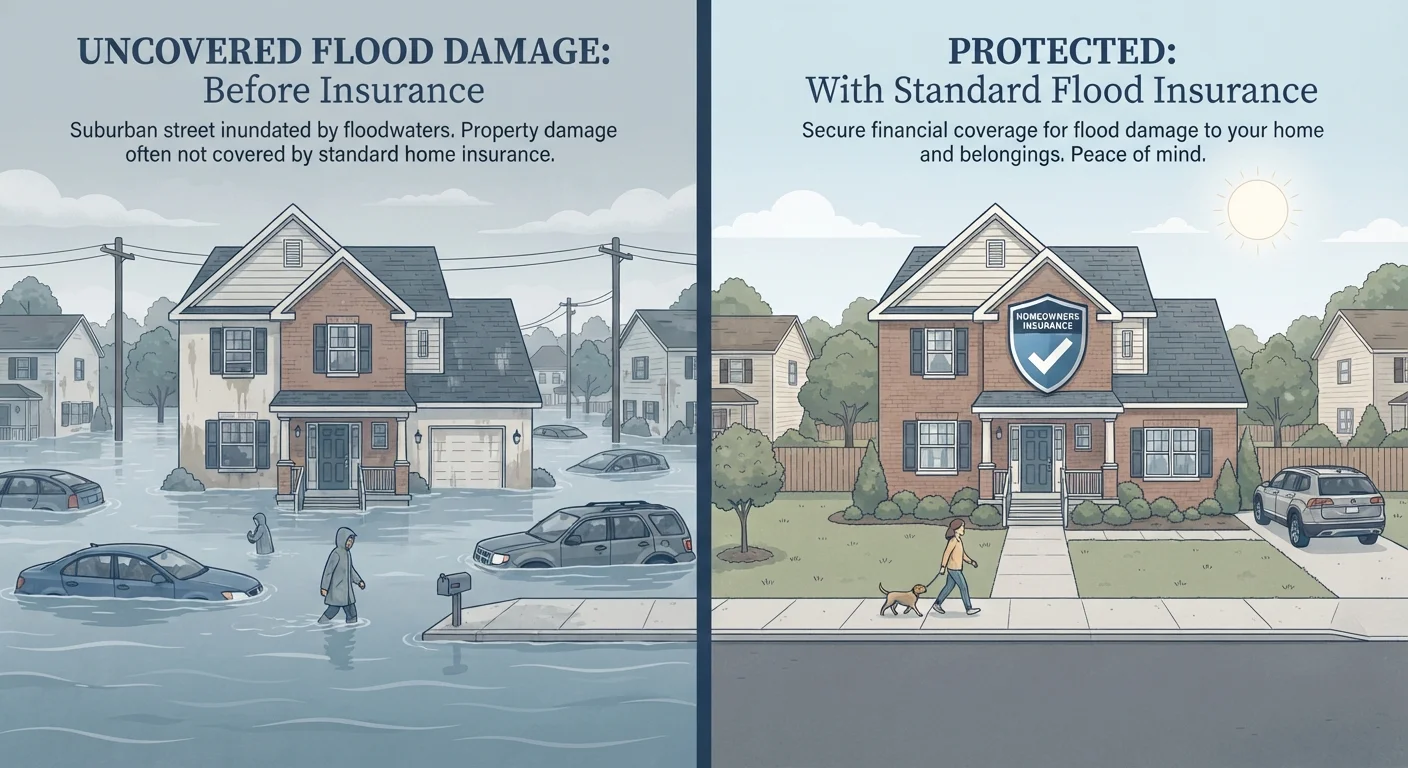
Flood damage is not covered under either standard policy. This is one of the most misunderstood gaps in residential insurance. Both homeowners and renters who live in flood-prone areas typically need a separate policy. Flood Insurance and Homeowners Insurance: Why They're Not the Same Thing explains how that coverage works and who provides it.
Other common exclusions in both policy types include:
- Earthquake damage (requires a separate rider or policy in most states)
- Intentional damage caused by the policyholder
- Business equipment used for home-based commercial activity (may require a separate endorsement)
- High-value items like jewelry or art above standard limits (may require a scheduled personal property rider)
Actual Cash Value vs. Replacement Cost
Both homeowners and renters policies may offer personal property coverage on either an actual cash value (ACV) or replacement cost value (RCV) basis. ACV pays what your item is worth at the time of loss after depreciation; RCV pays what it costs to replace the item with a new equivalent. RCV coverage typically comes with a higher premium but can make a significant difference in a claim. Check your policy declarations page to see which method your insurer uses. For definitions of terms like these, see Insurance Terms That Look Similar but Mean Very Different Things.
Coverage terms, limits, and exclusions vary by insurer and state. Always read your policy documents carefully and consult a licensed insurance agent if you're unsure what's included or excluded in your specific policy.
This article provides general insurance information for educational purposes and does not constitute personalized insurance, financial, or legal advice. Coverage details vary by provider, policy, and state. Consult a licensed insurance professional to understand your specific options and needs.