
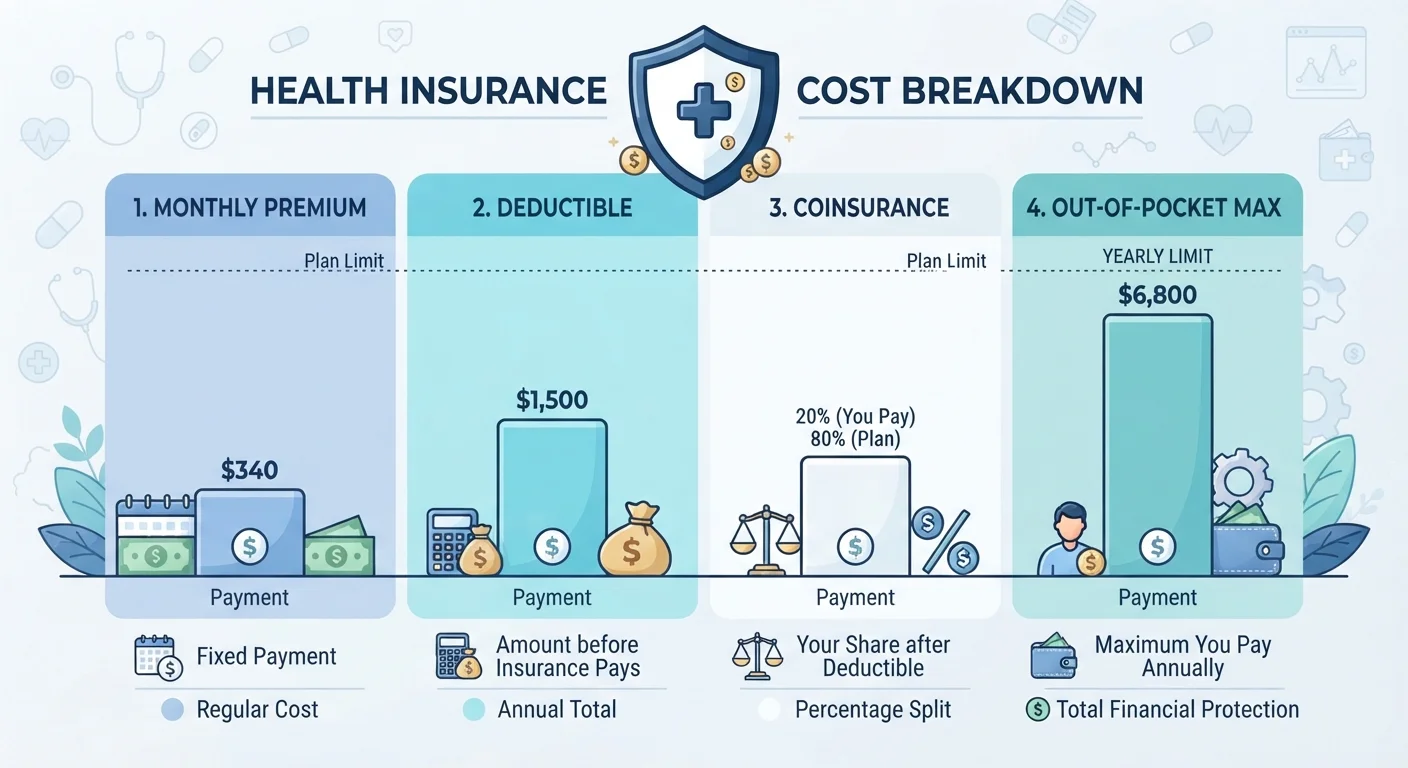
How the Out-of-Pocket Maximum Fits Into Your Plan
Health insurance plans involve several layers of cost-sharing, and the out-of-pocket maximum is the last line of defense. To understand where it fits, it helps to trace how costs flow in a typical plan year.
First, you pay the deductible - the fixed amount you owe before your insurer starts contributing. After meeting the deductible, you share ongoing costs through copays (flat fees per visit) and coinsurance (a percentage split, such as 20% you / 80% insurer). All three of these payments accumulate. When the running total hits your out-of-pocket maximum, the insurance plan absorbs all further covered costs.
For a deeper look at how each of these figures interact, see Deductibles, Premiums, and Out-of-Pocket Maximums: The Three Numbers That Define Your Coverage. And if you want the full picture of what your plan covers in the first place, Health Insurance Explained offers a solid foundation.
$9,450
ACA individual out-of-pocket maximum (2024)
The federal government sets an annual ceiling on out-of-pocket maximums for ACA-compliant plans; for 2024, the limit for self-only coverage is $9,450.
$18,900
ACA family out-of-pocket maximum (2024)
For family coverage under ACA-compliant plans in 2024, the combined out-of-pocket maximum is capped at $18,900 across all covered members.
~1 in 4
Americans with difficulty affording medical bills
According to Kaiser Family Foundation surveys, roughly one in four U.S. adults report problems paying medical bills, underscoring why cost caps in health plans matter.
What Counts - and What Doesn't
Not every dollar you spend on healthcare applies toward your out-of-pocket maximum. Understanding what counts is critical to accurately tracking your progress toward the cap.
Counts toward the maximum:
- Deductible payments
- Copays for covered services
- Coinsurance on covered services
Does NOT count toward the maximum:
- Monthly premiums
- Costs for services your plan excludes from coverage
- Out-of-network charges (depending on your plan type)
- Amounts above your plan's allowed rate for a service
This distinction matters because many people assume any healthcare spending counts. In practice, paying a provider who is out-of-network - or receiving a service your plan categorizes as excluded - may not move your counter at all. Always review your plan's Summary of Benefits and Coverage (SBC) document to confirm which costs accumulate.
Track Your Spending Against the Cap
Most insurers provide an online portal or Explanation of Benefits (EOB) statements that show your year-to-date progress toward your out-of-pocket maximum. Checking this regularly - especially before scheduling non-urgent procedures - can help you time care strategically within a plan year.
Individual vs. Family Out-of-Pocket Maximums
If your plan covers multiple family members, two separate limits typically apply. An individual maximum protects each covered person, while a family maximum caps total spending across all members combined.
Here is how it works in practice: once one family member's costs reach the individual limit, the insurer covers 100% of that person's additional covered expenses - even if the family hasn't collectively hit the family maximum. Conversely, if the family aggregate limit is reached first, all covered members benefit, regardless of individual tallies.
Family plans can be structured differently, so it is worth confirming with your insurer or reviewing the plan documents to understand exactly how embedded individual limits work within your specific policy.
Why This Number Matters When Choosing a Plan
The out-of-pocket maximum is one of the most consequential numbers on any health plan comparison. A plan with a low monthly premium may carry a much higher out-of-pocket maximum, meaning a serious illness or injury could expose you to far greater costs than a higher-premium plan with a lower cap.
When evaluating plans, think about your expected healthcare use for the year. Someone managing a chronic condition or planning a procedure should pay close attention to how quickly they might reach the cap - and whether the plan's network includes their preferred providers.
The out-of-pocket maximum is also distinct from policy limits or coverage limits, which cap what an insurer pays rather than what you pay. For clarity on that distinction, see Policy Limit vs. Coverage Limit. Similarly, plan exclusions can affect which costs count toward your cap, so understanding the difference between exclusions and limitations helps you read your policy accurately.
For a closer look at how copays and coinsurance interact with this ceiling, Deductibles, Premiums, and Copays: What Each One Actually Costs You explains each cost-sharing element in plain terms.
“The out-of-pocket maximum is essentially your financial ceiling - the number that tells you the worst-case scenario you're agreeing to when you enroll in a plan. Knowing it before you need it is the whole point.”
— Consumer Health Literacy Project, Public health education initiative focused on insurance literacy
This article is for general informational purposes only and does not constitute personalized financial, insurance, or legal advice. Coverage terms, limits, and rules vary by plan and by state. Consult a licensed insurance agent or adviser and review your actual policy documents before making coverage decisions.