Why Insurance Myths Are Especially Costly at Claim Time
Most insurance misunderstandings stay harmless until the moment a loss occurs. That's when assumptions meet policy language - and the gap between them becomes financially real. A homeowner who believes flood damage is part of standard coverage, or a driver who thinks their policy follows the car rather than the driver, may face a denial that wipes out thousands of dollars in expected reimbursement.
This article addresses the myths most likely to affect claim outcomes. For a broader look at terms that create confusion before you ever file, see our plain-language guide to insurance terminology.
Myth
My homeowners insurance covers flood damage - water is water.
Fact
Standard homeowners policies explicitly exclude flood damage. Separate flood insurance, typically through the National Flood Insurance Program (NFIP) or a private insurer, is required.
This is one of the most consequential and widely held misconceptions in personal insurance. A standard homeowners policy covers certain types of water damage - such as a burst pipe or an appliance leak - but explicitly excludes flooding caused by external water sources, including storm surge, overflowing rivers, or heavy rainfall runoff. The exclusion is not hidden; it is standard across virtually all homeowners policies in the United States.
Policyholders who discover this gap after a storm has already caused damage have no recourse under their existing policy. Flood coverage must be purchased separately and in advance. Even in lower-risk zones, flood events can and do occur.
Myth
If someone else drives my car and causes an accident, their insurance pays.
Fact
In most states, auto insurance follows the vehicle, not the driver. The car owner's policy is typically the primary coverage when a permissive driver causes an accident.
Many people assume that because they weren't driving, their policy isn't involved. In practice, most U.S. auto insurance policies extend coverage to anyone who drives your car with your permission - meaning your policy responds first if a friend or family member causes a crash while driving your vehicle.
The permissive driver's own insurance may apply as secondary coverage, but your policy - including your deductible and your claims history - is usually affected first. This is worth understanding before lending your car, especially to someone with a spotty driving record.
Myth
My insurance will pay to replace my belongings with brand-new equivalents.
Fact
Whether you receive replacement cost or depreciated actual cash value depends entirely on which type of coverage you purchased. Many standard policies default to actual cash value.
Actual cash value (ACV) represents what a lost or damaged item is worth at the time of the loss - not what it would cost to buy a new one. Depreciation is subtracted based on the item's age and condition. A five-year-old laptop stolen from your home might be worth a fraction of its original price under ACV terms.
Replacement cost value (RCV) coverage pays what it actually costs to buy a comparable new item, which is typically a significantly higher amount. Upgrading to RCV coverage usually costs more in premiums, but the difference at claim time can be substantial. Check your declarations page to confirm which valuation method your policy uses - and consider whether it aligns with your expectations. For more on terms that look similar but function differently, see insurance terms that are easy to mix up.
Myth
Filing a small claim is always worth it - that's what insurance is for.
Fact
Filing a claim - even a small one - can trigger a premium increase or affect your renewal terms, sometimes costing more over time than the original payout.
Insurers track claims history and may adjust your premium at renewal based on frequency or severity of past claims. Some insurers also participate in databases that share claims data across carriers, meaning a claim filed with one company can be visible to another when you shop for coverage later.
For minor losses close to your deductible amount, it's often worth calculating whether the expected reimbursement justifies the potential long-term premium impact before submitting a claim. This is a general principle of claims management, not a guarantee of any specific outcome - actual effects vary by insurer, state, and policy terms.
Myth
My health insurance covers all medical care as long as I have coverage.
Fact
Health policies contain networks, exclusions, and prior-authorization requirements that can result in partial or full denial of specific services.
Having health insurance does not mean every medical service is automatically covered. Most plans distinguish between in-network and out-of-network providers, with significantly different cost-sharing. Certain procedures, medications, or specialists may require prior authorization - advance approval from the insurer - before the service is rendered. Without it, the claim may be denied even if the care was medically necessary.
Coverage also varies by plan type: an HMO typically requires referrals and restricts coverage to its provider network, while a PPO offers more flexibility at higher cost. Reading your Summary of Benefits and Coverage document before seeking non-emergency care can prevent unexpected bills. This content is general health insurance education and not a substitute for advice from a licensed health insurance adviser or healthcare provider.
Myth
Liability coverage protects me if I'm injured in an accident.
Fact
Liability coverage is designed to protect other people from harm you cause - not to cover your own injuries or property damage.
Liability coverage - whether on an auto or homeowners policy - pays for bodily injury or property damage that you are legally responsible for causing to someone else. It does not pay for your own medical expenses or repair your own property.
To cover yourself in an auto accident, you would need separate coverages such as medical payments (MedPay), personal injury protection (PIP), or collision coverage. On a homeowners policy, your own injuries on your property are typically handled through health insurance, not homeowners liability. Understanding this distinction is foundational to building a coverage package that actually protects you - not just the people around you. For a broader look at coverage misconceptions, see what people commonly get wrong about insurance coverage.
Before You Assume - Read the Policy
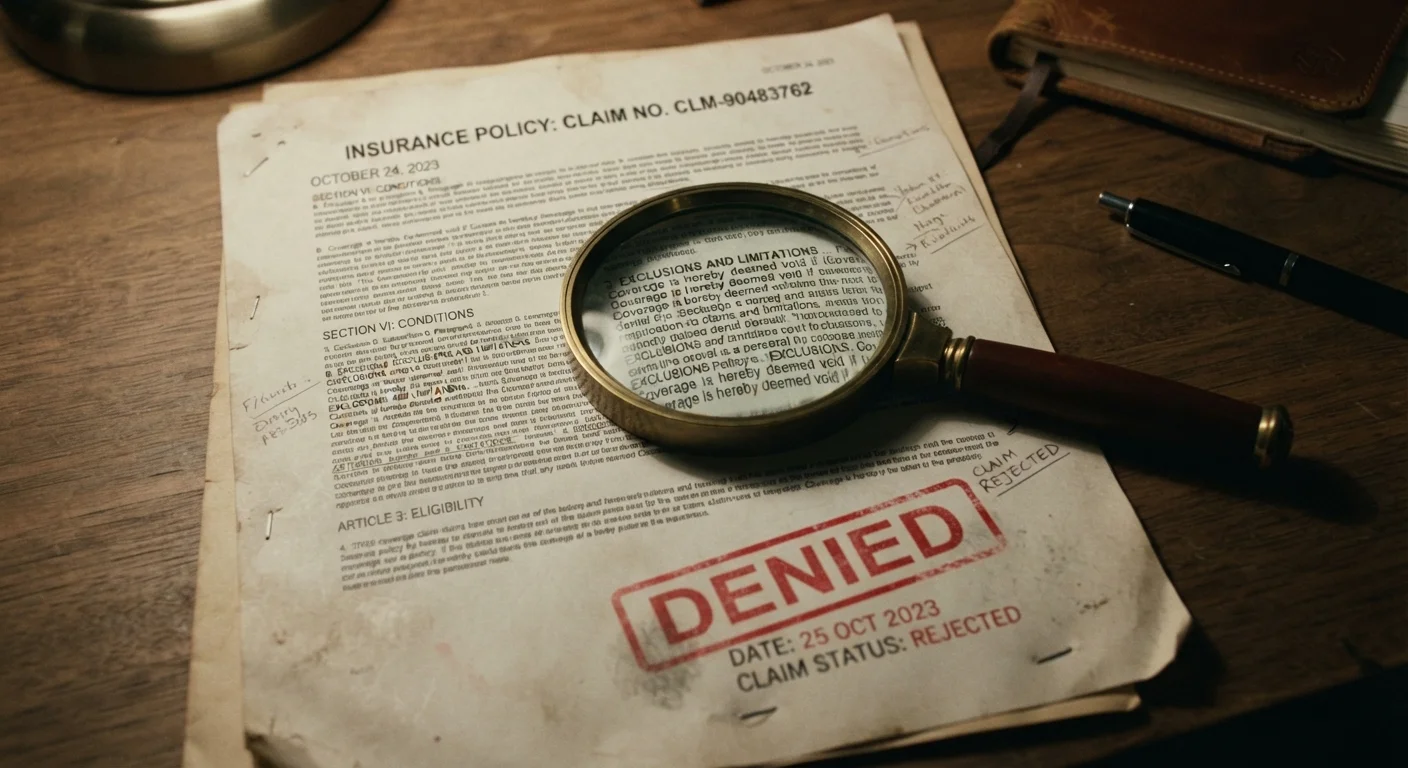
Coverage is determined by what a policy document actually says, not what a consumer reasonably expects it to say. Insurers are legally bound to the written terms, which means exclusions, sublimits, and conditions buried in the fine print carry real weight at claim time.
1 in 3
Homeowners who believe flood is covered by standard policy
Surveys conducted by insurance industry groups have consistently found that a substantial share of homeowners incorrectly assume flood damage is included in standard homeowners policies.
40%+
Of home insurance claims involve contents valuation disputes
Industry data indicates that disputes over how personal property is valued - ACV versus replacement cost - represent a significant share of homeowners claim disagreements.
Many policyholders are also surprised to learn that how a loss is valued matters as much as whether it's covered. Policies that pay actual cash value (ACV) deduct depreciation from what you receive, while replacement cost value (RCV) policies reimburse what it costs to replace an item at today's prices - often a substantially larger amount. This distinction alone can determine whether a settlement feels fair or falls short.
Understanding these mechanics before a loss occurs puts you in a far stronger position. Our guide on what to verify in your policy before filing walks through the specific sections worth reviewing in advance.
Exclusions Override General Assumptions
Insurers are not required to cover losses simply because a policyholder believed they would be covered. Exclusions - specific situations or causes of loss explicitly removed from coverage - are legally enforceable and routinely upheld in claims disputes. No assumption, however reasonable, overrides written policy language. If you haven't read your exclusions section, you don't fully know what you've purchased.
For a closer look at why claims get denied - and what specific policy language is usually cited - see why insurance claims get denied and what the fine print says. And if you're concerned about gaps that don't show up until a claim is already underway, gaps most policyholders don't know they have is worth reading now rather than later.
This article is for general informational and educational purposes only. It does not constitute personalized insurance, financial, or legal advice. Coverage terms, exclusions, and regulations vary significantly by provider, policy type, and state. Always read your actual policy documents carefully and consult a licensed insurance agent or adviser for guidance specific to your situation.