What the Declarations Page Actually Is
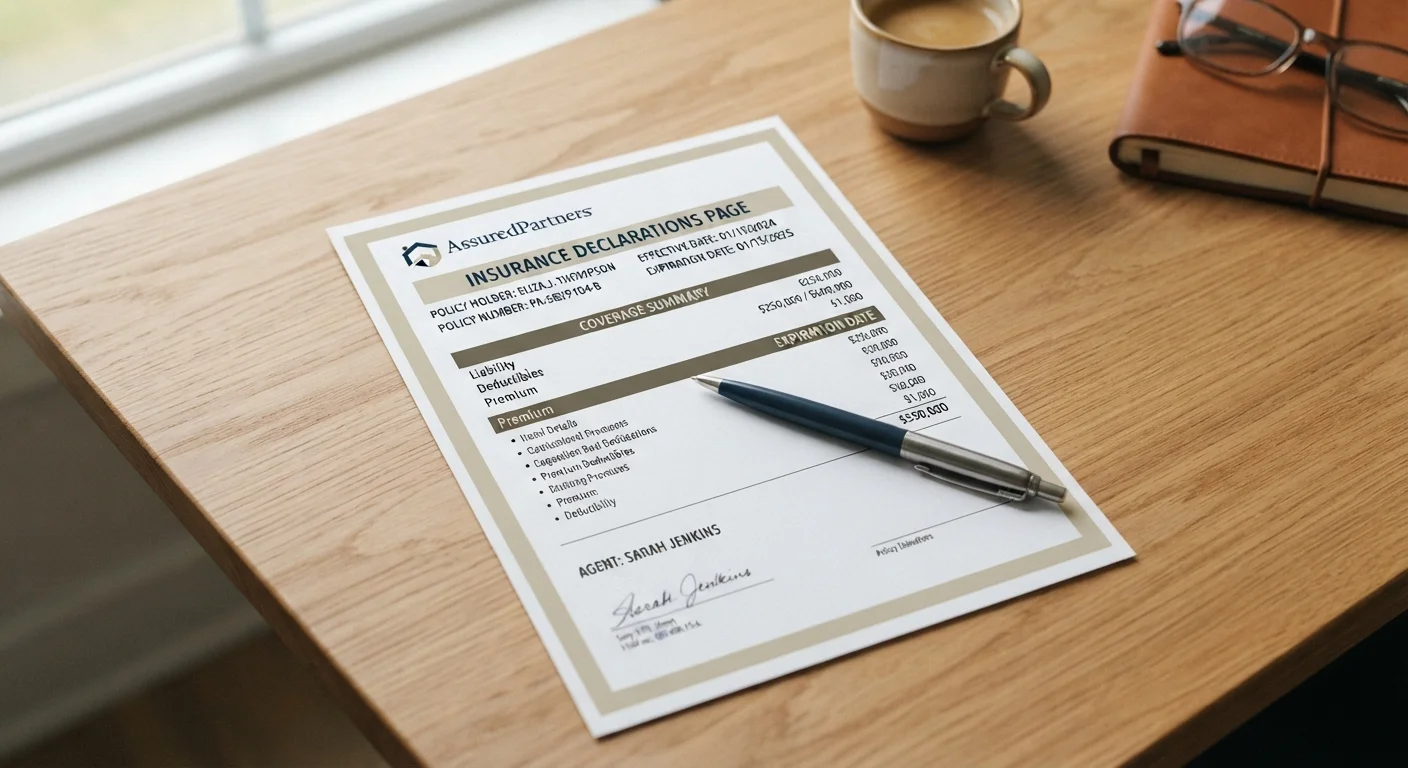
When an insurer issues a policy, the declarations page is the first thing you see - and for good reason. It answers the five questions every policyholder needs answered before anything else: Who is covered? What is covered? How much will the insurer pay? What does it cost? And when does coverage begin and end?
Despite its brevity, the dec page is legally binding. Every number on it - your coverage limit, your deductible, your premium - is part of the contract. If those numbers are wrong, your claim payout could be wrong too. That's why it's worth treating the dec page as more than a formality.
For a broader orientation to how this document fits into the rest of your policy, see the anatomy of a full insurance policy, which walks through every section from the insuring agreement to conditions.
Line by Line: What Each Section Means
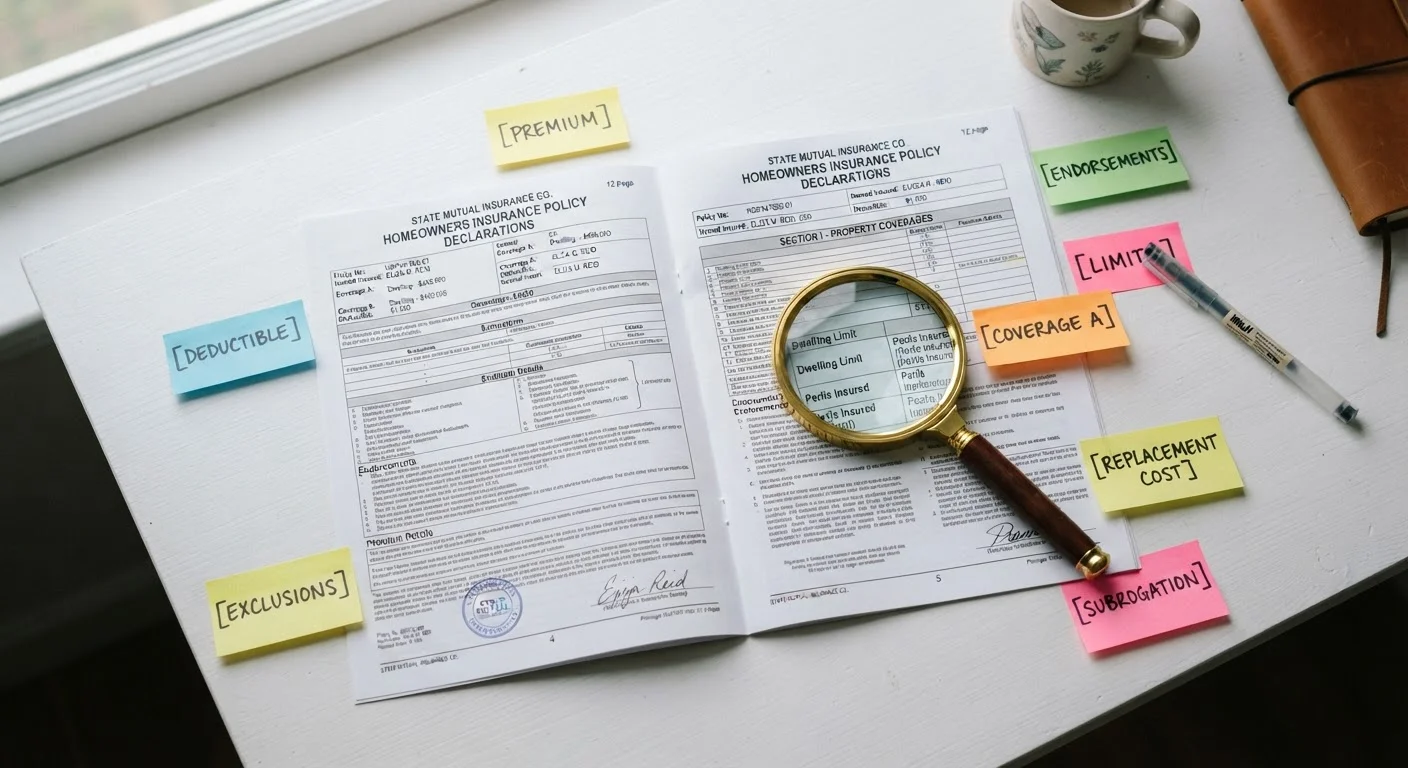
Most declarations pages - whether for auto, homeowners, renters, or life insurance - share the same core elements. Here's what each one tells you:
- Named insured: The person or entity the policy legally protects. If your name is misspelled or a co-owner is missing, coverage disputes can arise.
- Policy number: Your unique identifier for this contract. You'll use it every time you call your insurer or file a claim.
- Policy period: The exact start and end dates of coverage (usually shown as 12-month terms). Coverage outside these dates does not exist under this policy.
- Coverage types and limits: Each type of protection (dwelling, liability, collision, etc.) is listed alongside its maximum payout. This is the ceiling - not a guarantee - of what the insurer will pay for a covered loss.
- Deductible: The amount you pay out of pocket before the insurer pays the remainder. Higher deductibles typically lower your premium.
- Premium: What you owe for the coverage, often broken down by payment period (monthly, semi-annually, annually).
- Endorsements: Any changes or additions to the base policy are noted here. They can expand or restrict coverage, so each one warrants a closer read.
- Lienholder or additional insured: If a bank holds your mortgage or a landlord requires coverage, they may appear here. Their interests are legally protected alongside yours.
Check Every Name and Date First
Before reading anything else on your declarations page, confirm the named insured, property address, and policy dates are accurate. These three fields are foundational - errors in any one of them can create coverage disputes that are difficult to resolve after a loss has occurred.
For definitions of any term you encounter on your dec page, the Insurance Glossary Every Policyholder Should Bookmark is a reliable plain-English reference.
What the Dec Page Doesn't Tell You
The declarations page is a summary, not a complete picture. Several critical pieces of your policy live elsewhere:
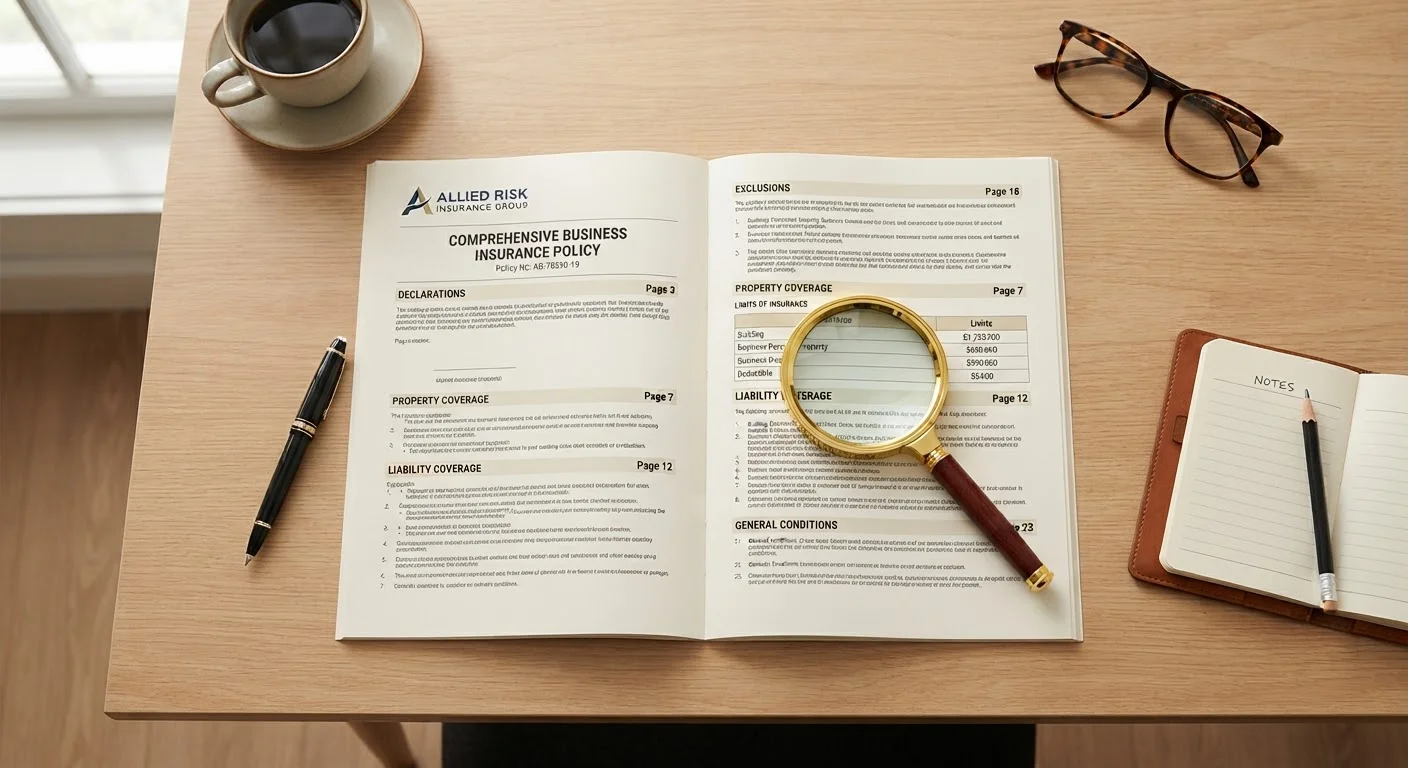
- Exclusions - specific situations, events, or property types the insurer will not cover - appear in a dedicated exclusions section deeper in the document.
- Conditions - obligations you must meet to keep coverage valid (like timely reporting of claims) - are typically in a separate conditions section.
- Definitions - the exact, legal meaning of words like "occurrence," "residence premises," or "bodily injury" - shape how coverage applies and are defined in their own section.
Limits Are Not Guarantees of Coverage
A coverage limit on your declarations page tells you the maximum the insurer will pay - but only if the claim is approved under the full policy terms. Whether a specific loss qualifies as covered depends on the insuring agreement, exclusions, and conditions found in the body of the policy. Reading the dec page alone is not enough to confirm you're protected for a given scenario.
A common mistake is treating coverage limits as confirmation that a loss is covered. The limit only tells you the maximum payout if a claim is approved. Whether the loss is actually covered depends on the full policy language, exclusions, and conditions - none of which appear on the dec page.
To build comfort navigating the rest of the document, Reading a Policy Document Without Getting Lost shows you exactly where to find each component.
How to Use Your Declarations Page Proactively
Most people only look at their dec page when something goes wrong. A more useful habit is reviewing it at each renewal - or any time your circumstances change.
1 in 8
Homeowners who are underinsured at claim time
Industry research consistently finds a significant share of homeowners carry coverage limits that fall short of actual rebuild costs, often because limits were set at purchase and never updated.
3-5 min
Time needed to review a declarations page
Insurance educators and consumer advocates note that a careful read of a standard dec page typically takes only a few minutes - making it one of the highest-value uses of time when a new policy or renewal arrives.
Specifically, ask yourself these questions when your new dec page arrives:
- Are all named insureds correct and current?
- Do coverage limits still reflect the value of what you're protecting - your home's rebuild cost, your car's value, your income?
- Has your deductible changed?
- Are any endorsements listed that you didn't request?
- Is the premium what you were quoted?
If you spot a discrepancy, contact your insurer or licensed agent promptly. Changes to a declarations page can sometimes be made mid-term through an endorsement. Before renewing or switching policies, use the checklist in Before You Sign: Key Policy Terms to Confirm in Writing to make sure you're not leaving coverage gaps.
This article is for general informational purposes only and does not constitute insurance, legal, or financial advice. Coverage terms, limits, and exclusions vary by insurer and state. Always read your full policy documents and consult a licensed insurance agent or adviser for guidance specific to your situation.