Why Order Actually Matters
Skincare layering isn't a marketing gimmick - it's rooted in basic chemistry. Products have different molecular weights, pH levels, and delivery mechanisms. When you apply them in the wrong order, a thicker formula can physically block a lighter one from reaching the skin, or a high-pH product can neutralize a low-pH active before it has a chance to work.
The practical rule that covers most situations: apply products from thinnest to thickest consistency, and water-based before oil-based. This ensures each layer can penetrate the skin rather than sitting on top of the previous one.
Once you understand the logic, the sequence becomes intuitive. You're essentially building from a clean, prepared base toward a protective outer seal. If you're also trying to build a consistent skincare habit, the habit stacking approach - attaching new behaviors to ones you already do - can help make this routine stick.
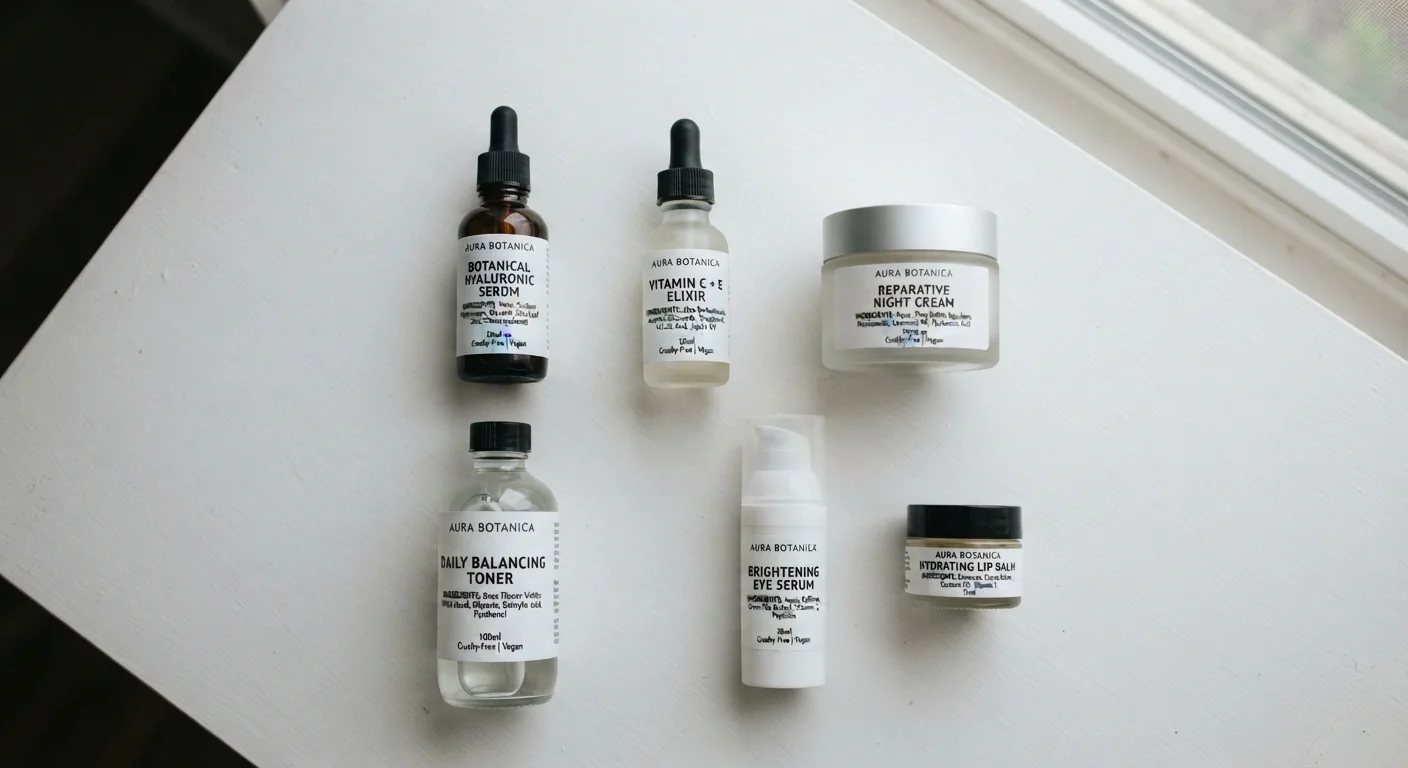
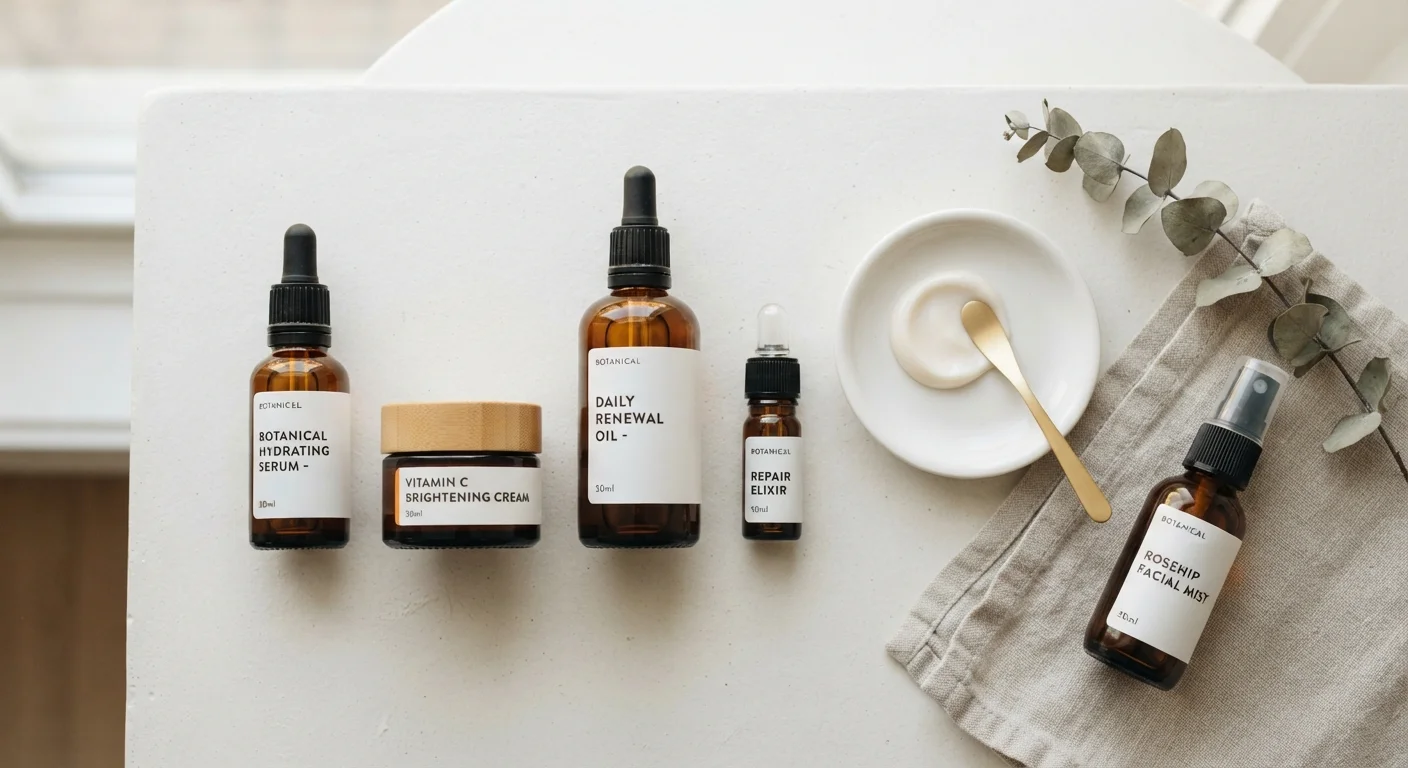
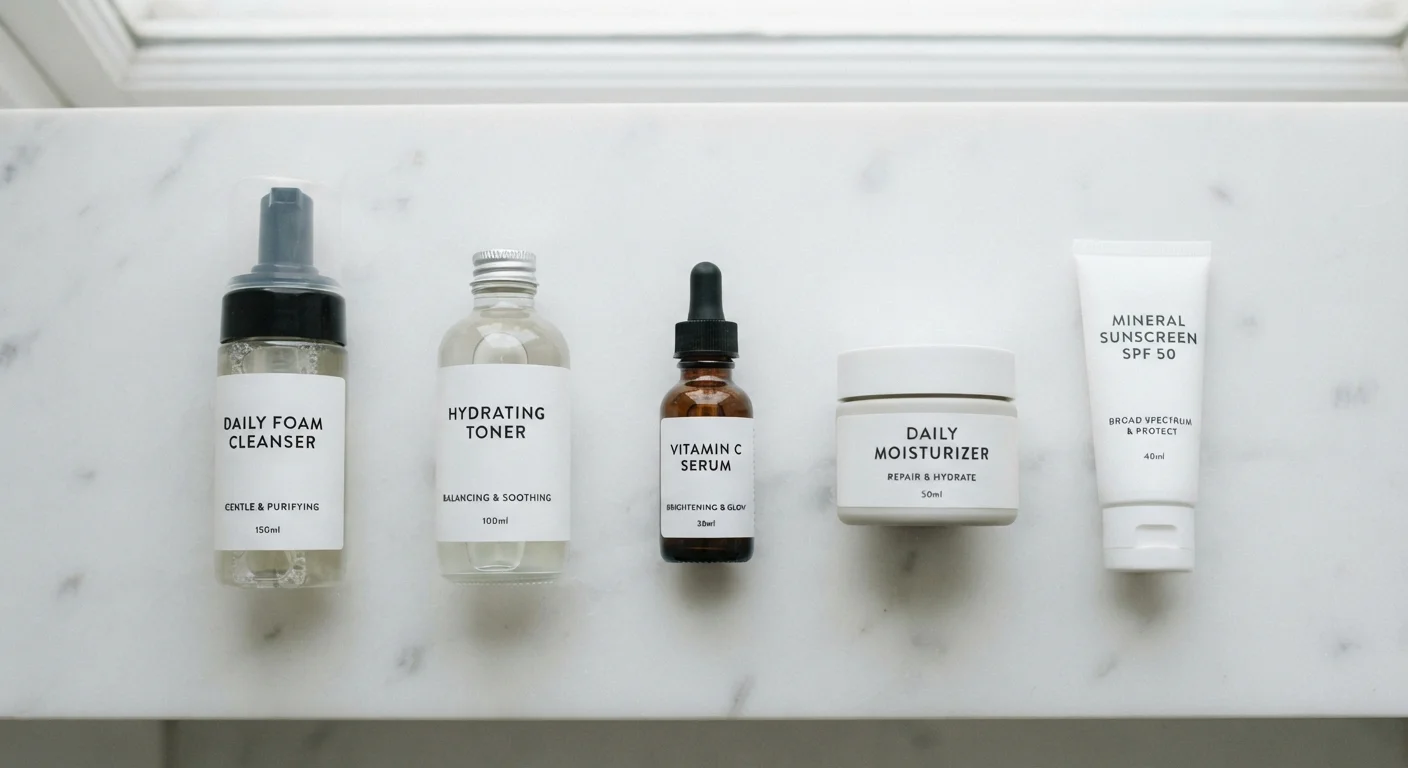
What you will need
The Correct Layering Sequence
Follow these steps for a complete morning or evening routine. Not every step applies to every person - use only the products that match your skin's needs.
Cleanse
Start with a clean canvas. Use a gentle cleanser suited to your skin type. In the morning, a water rinse or light cleanser is often sufficient unless you have oily skin. In the evening, remove makeup and sunscreen thoroughly - a double cleanse (oil cleanser followed by water-based cleanser) is worth considering if you wear heavy SPF or makeup.
Toner or Essence (if used)
Toners and essences are typically water-thin and designed to be absorbed immediately after cleansing. They can help balance skin pH, add a first layer of hydration, or deliver mild actives. Apply by pressing into skin with palms or a cotton pad - avoid rubbing.
Targeted Serums and Treatments
Serums are where most active ingredients live - vitamin C, niacinamide, hyaluronic acid, peptides. Apply from lightest to heaviest consistency. If you use multiple serums, use one with a watery texture before a gel-textured one.
Vitamin C serums are typically low-pH and work best applied directly after toning, before other serums. Hyaluronic acid serums work well on slightly damp skin to help draw in moisture.
Eye Cream (if used)
Eye creams are typically richer than serums but lighter than a full moisturizer. Apply gently with a ring finger using a tapping motion around the orbital bone. Avoid pulling the delicate skin under the eye.
Moisturizer
Moisturizer seals in the layers beneath it and reinforces the skin barrier. Choose a formula suited to your skin type - gel-based for oilier skin, cream-based for drier types. Apply while skin is still slightly tacky from the previous layer to lock in hydration.
Sunscreen (Morning Only)
SPF is the final step every morning, full stop. Apply a broad-spectrum sunscreen with at least SPF 30 as the last product before you leave the house. Applying anything over sunscreen - including makeup with SPF - dilutes the protective film. Allow 2-3 minutes for sunscreen to set before applying powder or foundation.
Understanding what's in each product also matters. If ingredient lists feel opaque, our guide on reading skincare ingredient lists breaks down what to look for and what to skip past.
Common Mistakes and How to Avoid Them
Even with the correct sequence in mind, a few pitfalls trip up most people when they're starting out.
- Applying SPF then moisturizer: Moisturizer applied over sunscreen dilutes the UV filter and disrupts its film-forming layer. Sunscreen is always last in the morning.
- Mixing acids and retinols in the same step: Layering low-pH acids (like AHAs or BHAs) directly with retinol can cause irritation and may reduce efficacy. If you use both, consider alternating nights rather than stacking them. See our breakdown of vitamin A derivatives for specifics on retinol strength and timing.
- Skipping wait time: Rushing between steps - especially after a low-pH treatment - doesn't allow the product to fully absorb or adjust the skin's pH before the next layer lands.
- More product doesn't mean more effect: Using a large amount of serum won't amplify results; it typically just wastes product and can cause pilling.
Keep Your Routine Simple First
A reliable two- or three-step routine applied correctly will outperform a seven-step routine applied in the wrong order. Start with a cleanser, moisturizer, and SPF - then add targeted serums one at a time so you can tell what's working. This also makes it easier to identify any products that cause irritation.