
The Dropout Pattern Is Predictable - and Preventable
Research on exercise adherence consistently shows that a large share of people who begin a new fitness program stop within the first two months. The reasons are rarely about willpower. Instead, they reflect predictable mismatches between how programs are designed and how human behavior actually works.
Understanding these patterns gives you a real advantage. The same dropout dynamics that derail most beginners can be anticipated and planned around - before they catch you off guard. If you've ever wondered why your routines seem to collapse right around the same point, you're not alone, and you're not failing. Why Healthy Habits Fall Apart After Two Weeks explores this early-stage vulnerability in more depth.
Starting with an overly ambitious program that isn't matched to your current fitness level.
Why it happens: Motivation peaks at the start of a new habit, which makes intense goals feel achievable in the moment. People often plan for their best days, not their average ones.
Relying entirely on motivation to show up, with no external structure or accountability.
Why it happens: Motivation feels powerful at the outset, so it's easy to assume it will last. In reality, motivation fluctuates day to day and is a poor long-term driver of behavior.
Skipping rest and recovery, leading to burnout or injury that forces a full stop.
Why it happens: Early progress can create a "more is better" mindset. The discomfort of rest days feels counterproductive when enthusiasm is high.
Treating a single missed session as a sign of failure and abandoning the program entirely.
Why it happens: The "all-or-nothing" cognitive pattern is common: once the streak breaks, the whole effort feels ruined. This pattern is sometimes called the "what-the-hell effect" in behavioral research.
Choosing an exercise type based on what seems most effective rather than what you'll actually enjoy.
Why it happens: People often pick high-calorie-burning activities or routines they've seen recommended, without considering personal preference or sustainability.
What Actually Helps People Stay the Course
Avoiding these mistakes doesn't require a perfect plan - it requires a realistic one. A few evidence-informed principles have shown broad value across different populations and fitness levels.
~50%
People who quit a new exercise program within 6 months
Decades of exercise adherence research suggest roughly half of people who begin structured fitness programs drop out within six months.
2x
Greater adherence with social accountability
Studies on behavior change consistently find that people who exercise with a partner or in a group setting maintain routines at significantly higher rates than those who work out alone.
Anchor exercise to something you already do. One of the most effective tools in behavioral science is habit stacking - pairing a new behavior with an existing routine so it requires less decision-making. Brushing your teeth, brewing coffee, commuting: each of these can serve as a reliable trigger for a short movement habit. See how this approach works in practice: Stacking Habits: Using Existing Routines to Anchor New Ones.
Prioritize consistency over intensity. The evidence is clear that showing up regularly - even for shorter, moderate sessions - produces more durable health outcomes than sporadic high-effort workouts. Consistency vs. Intensity: What Actually Drives Long-Term Health Gains breaks down this tradeoff across multiple health domains.
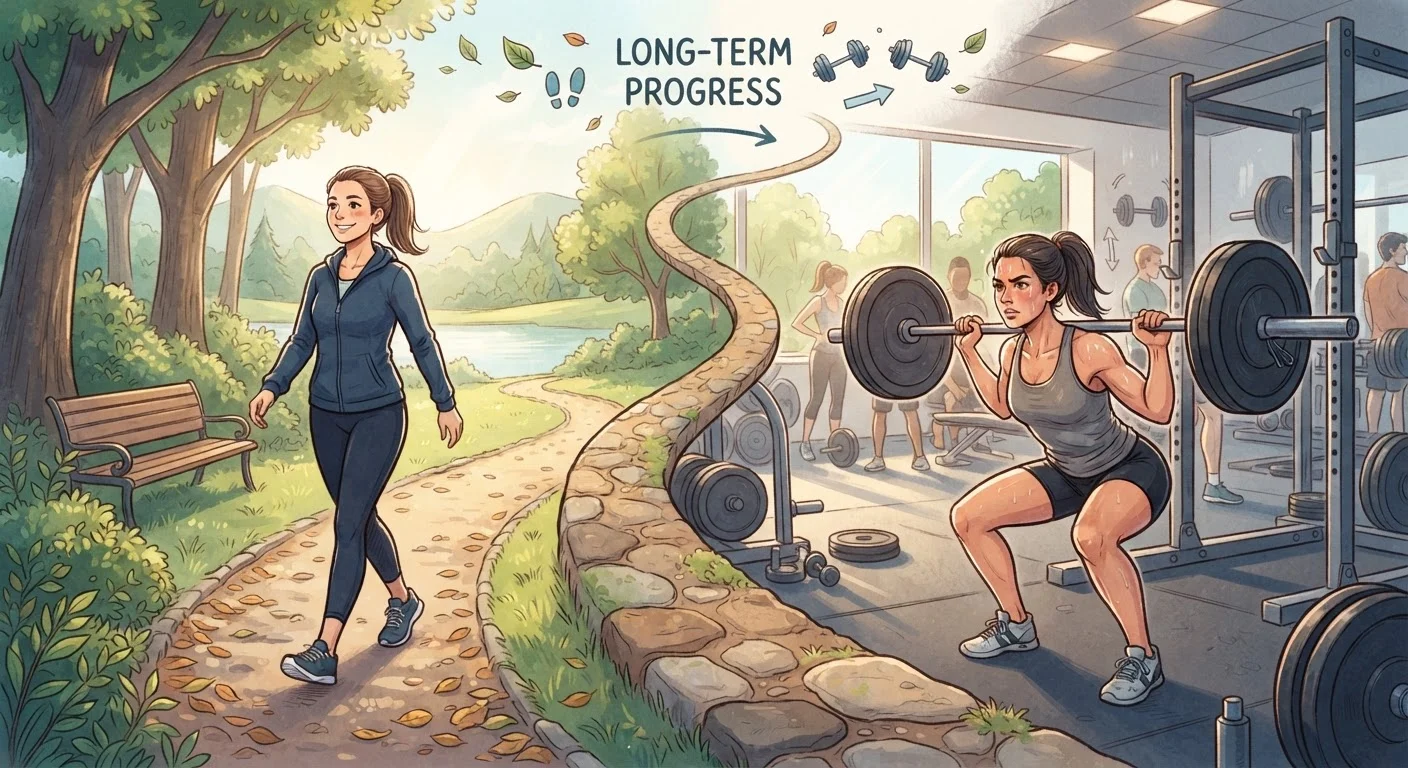
Build in flexibility without abandoning structure. Life interrupts routines. Having a minimum viable version of your workout - a 10-minute walk instead of a 45-minute gym session - keeps the habit alive without demanding perfection. The goal is never to miss twice in a row, not to never miss at all.
Don't Confuse Soreness With Progress
Delayed onset muscle soreness (DOMS) after new activity is normal, but it is not a reliable indicator of how effective your workout was. Chasing soreness by constantly increasing intensity can accelerate injury risk and undermine the consistency that actually drives long-term results. If soreness is interfering with daily function, scale back before your next session.
For more on building the full foundation of sustainable routines, the Healthy Habits hub offers a range of guides organized around lasting behavioral change.
This article is for general informational purposes only and is not a substitute for personalized advice from a qualified healthcare or fitness professional. Consult a professional before beginning any new exercise program, especially if you have an existing health condition.