
Why Time, Not Distance, Is the Right Measurement
Most drivers instinctively think about following distance in car lengths - "I'm two cars back, that's fine." The problem is that car lengths are a fixed measurement in a very un-fixed situation. At 30 mph, two car lengths might be enough. At 65 mph, it's dangerously inadequate.
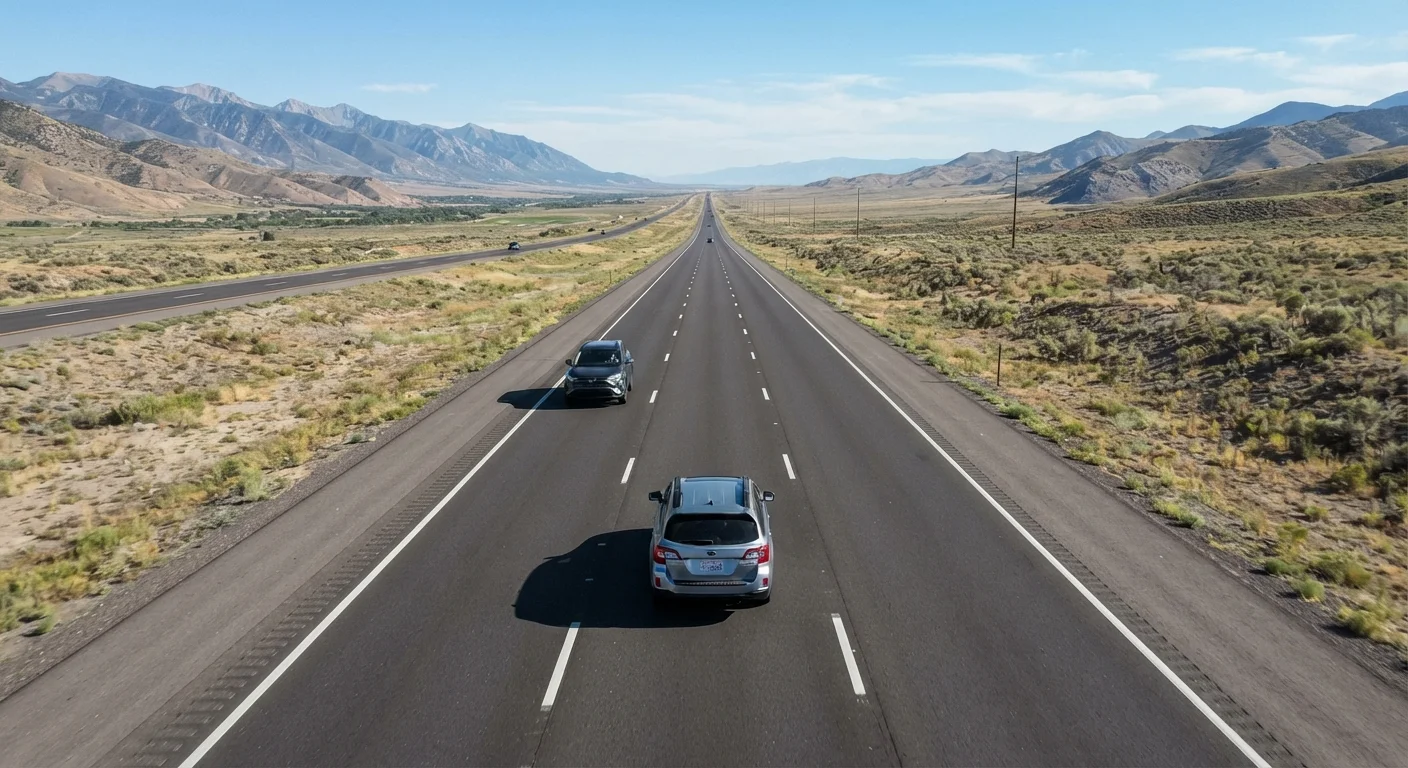
The 3-second rule solves this by measuring time elapsed, which automatically converts to the correct distance for whatever speed you're traveling. Physics does the math for you. At 60 mph, three seconds equals 264 feet. At 30 mph, it's 132 feet. Both gaps are appropriate for those speeds - and you don't have to calculate anything. You just count.
This is also why the rule transfers cleanly to any road environment - surface streets, interstate highways, construction zones. Speed changes constantly; a time-based rule adapts without any mental effort from the driver.
~1.5 sec
Average driver perception-reaction time
Transportation research consistently places the average reaction time between 1.5 and 2 seconds under normal driving conditions.
Top 3
Rear-end crashes among most common collision types
The NHTSA consistently identifies rear-end collisions as one of the most frequent crash types on U.S. roads, with following too closely as a leading contributing factor.
264 ft
Distance covered in 3 seconds at 60 mph
At 60 mph, three seconds of following distance translates to roughly 264 feet - approximately the length of 17 average-sized cars.
What Those 3 Seconds Actually Cover
Three seconds sounds like plenty of time. It isn't, and understanding why makes the rule easier to take seriously.
Research consistently estimates the average driver's reaction time - from perceiving a hazard to physically pressing the brake - at roughly 1.5 seconds. That's under ideal conditions: alert, undistracted, familiar road. In those 1.5 seconds at highway speeds, your vehicle has already traveled well over 100 feet before you've touched the brakes.
The remaining 1.5 seconds of your 3-second buffer is the braking distance: the time your vehicle needs to actually slow to a stop after the brakes are engaged. At 60 mph on a dry road, braking distance alone can exceed 130 feet.
Add those together, and you can see why 3 seconds is a minimum, not a comfort zone. Any distraction - glancing at a navigation screen, a sneeze, a split-second look at a passing road sign - eats directly into that buffer.
Practice the Count on Your Next Drive
Pick a roadside sign or overpass as a reference point and count the seconds from when the car ahead passes it to when you do. Do this a few times each drive until holding a 3-second gap feels natural. You'll likely find your current habits run shorter than you expect.
When 3 Seconds Isn't Enough
The 3-second rule assumes dry pavement, good visibility, and an alert driver. Change any of those variables and the required gap grows.
- Rain or wet pavement: Stopping distances increase substantially on wet roads. Aim for 4-5 seconds.
- Snow and ice: Stopping distances can increase by 3-10 times compared to dry asphalt. Double the gap at minimum - 6 seconds or more is reasonable.
- Fog or low visibility: If you can't see far ahead, you need more time to identify hazards, not less.
- Towing or hauling: A heavier vehicle takes significantly longer to stop. Increase your following distance accordingly.
- Driver fatigue: Tired drivers have measurably slower reaction times. If you're drowsy, more space is non-negotiable.
Understanding road conditions is closely tied to knowing how speed limits are set and why posted numbers don't tell the full story. For more on that, see how road design and speed limits interact.
Putting It Into Practice Every Drive
Knowing the rule is step one. Building it into your driving takes deliberate repetition until it becomes automatic.
Start on a familiar road at a comfortable speed. Each time a car ahead of you passes a sign or overpass, count. Don't adjust anything - just observe. Most drivers who do this honestly discover they're following at 1-1.5 seconds, not 3. That gap is a habits problem, not a knowledge problem.
One practical friction point: other drivers will often fill the space you leave. That's fine. Don't react by closing your gap again. The space isn't for them - it's for your stopping distance. Simply re-establish the gap after they merge ahead.
Over time, maintaining a proper following distance also reduces driver stress. Tailgating creates a reactive, tense driving experience. A 3-second buffer gives your eyes more road to process and your brain more time to make calm decisions. It's one of the lower-effort, higher-impact habits you can build behind the wheel.