What Liability Coverage Actually Means
Liability coverage is the part of an insurance policy that pays when you are found legally responsible for injuring someone else or damaging their property. In plain terms: if you cause the problem, liability coverage steps in to cover the costs - up to the limits you purchased.
This is a foundational concept across multiple types of insurance. You'll find it in auto policies, homeowners policies, renters policies, and business policies. The common thread is always the same: the coverage points outward, toward the other person's losses, not inward toward your own.
Liability Coverage
The part of an insurance policy that pays for injuries or property damage you cause to someone else. It does not cover your own losses.
Coverage Limit
The maximum dollar amount your insurer will pay for a covered claim. Any costs above this limit are your personal responsibility.
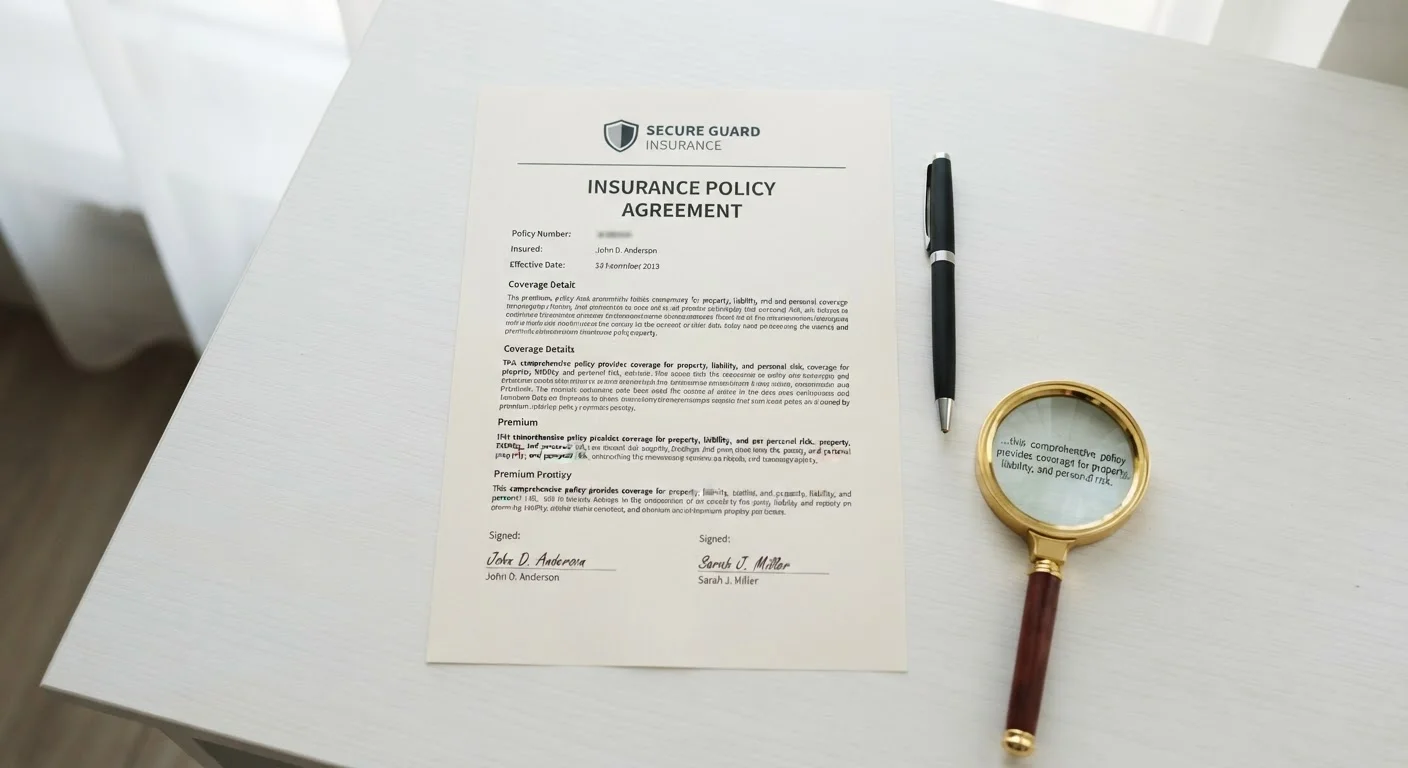
Declarations Page
The summary page at the front of your insurance policy that lists your coverage types, limits, and premium. It's the quickest way to see what you're protected for.
Bodily Injury Liability
The part of liability coverage that pays for medical expenses and related costs for a person you injure - not yourself.
Property Damage Liability
The part of liability coverage that pays to repair or replace someone else's property that you damaged.
Umbrella Policy
An additional liability policy that kicks in after your underlying auto or homeowners policy limit is exhausted, providing an extra layer of financial protection.
For a broader look at where liability fits among the major insurance categories, see the Insurance Types hub and the Insurance Terms glossary for definitions of the vocabulary you'll encounter on real policy documents.
The Two Main Parts: Bodily Injury and Property Damage
Most liability coverage is divided into two distinct components, and understanding each helps you read your policy more clearly.
Bodily Injury Liability (BI)
This pays for medical expenses, lost wages, and related costs for another person who is injured because of something you did. In an auto context, if you rear-end another driver, your bodily injury liability would cover that driver's hospital bills, rehabilitation, and potentially a pain-and-suffering settlement - up to your policy limit.
Property Damage Liability (PD)
This covers the cost to repair or replace someone else's property that you damaged. In the same car accident scenario, property damage liability would pay to fix the other driver's vehicle. In a homeowners context, it might cover a neighbor's fence your tree fell on.
Read Your Declarations Page First
Your declarations page is the fastest way to understand your actual coverage. It shows your liability limits in plain numbers without requiring you to read the entire policy. Pull it out and locate your bodily injury and property damage limits before you need them.
Your policy's declarations page - the summary page at the front of your policy documents - lists these limits separately. A common format looks like 100/300/100, meaning $100,000 per person for bodily injury, $300,000 per accident for bodily injury, and $100,000 for property damage.
What Liability Coverage Does Not Pay For
Knowing the exclusions is just as important as knowing what's covered. Liability coverage has clear boundaries.
- Your own injuries. Medical costs for your own injuries after an at-fault accident require separate coverage - such as Personal Injury Protection (PIP) or Medical Payments coverage.
- Your own property. Damage to your own car or home is handled by collision or dwelling coverage, not liability.
- Intentional acts. Insurers do not cover harm you cause on purpose. Liability is designed for accidents, not deliberate actions.
- Business activities on a personal policy. If you cause harm while operating a business, a personal auto or homeowners policy typically will not cover it. Separate commercial coverage applies.
- Contractual liability. Obligations you assume through a contract are generally not covered unless specifically endorsed.
Minimum Legal Limits May Not Be Enough
State-required minimum liability limits are often set well below what a serious accident can cost. Carrying only the legal minimum means your personal assets could be at risk if a claim exceeds your coverage. Talk to a licensed insurance agent about whether your current limits match your actual exposure.
For a deeper explanation of how what's covered and what's excluded is structured in a policy, see our article on named perils vs. open perils.
Why Your Coverage Limits Matter More Than You Think
Your liability limit is the maximum your insurer will pay for a covered claim. Everything above that limit is your responsibility - personally. A serious injury claim or lawsuit can reach six or seven figures, particularly when ongoing medical care, lost future income, and legal costs are factored in.
State-mandated minimum limits are often far lower than what a serious accident might actually cost. Carrying only the legal minimum means you are accepting personal financial exposure for anything beyond that threshold.
One option many policyholders use is an umbrella policy - a separate policy that provides additional liability coverage above the limits of your auto or homeowners policy. This is general information; whether it makes sense for your situation is a question for a licensed insurance agent or financial adviser who knows your full circumstances.
This article is for general informational purposes only and does not constitute personalized insurance, financial, or legal advice. Coverage terms, limits, and exclusions vary by policy and provider. Consult a licensed insurance agent or adviser for guidance specific to your situation.
Liability Coverage Across Different Policy Types
Liability is not just an auto insurance concept. It appears in several everyday policy types, each with its own context.
| Policy Type | What Liability Covers |
|---|---|
| Auto Insurance | Injuries and property damage you cause to others in a vehicle accident |
| Homeowners Insurance | Injuries to guests or damage to neighbors' property caused by you or your household |
| Renters Insurance | Similar to homeowners - protects against liability claims even without property ownership |
| Business/Commercial | Injuries or damage arising from business operations, products, or professional services |
Auto liability, for example, is explored in more detail in our article on how auto insurance fits into car ownership, which explains how liability, collision, and comprehensive coverage work together.
Regardless of the policy type, the core principle holds: liability coverage is the layer that protects others from losses you cause, and understanding your limits is essential to knowing where your protection ends.