
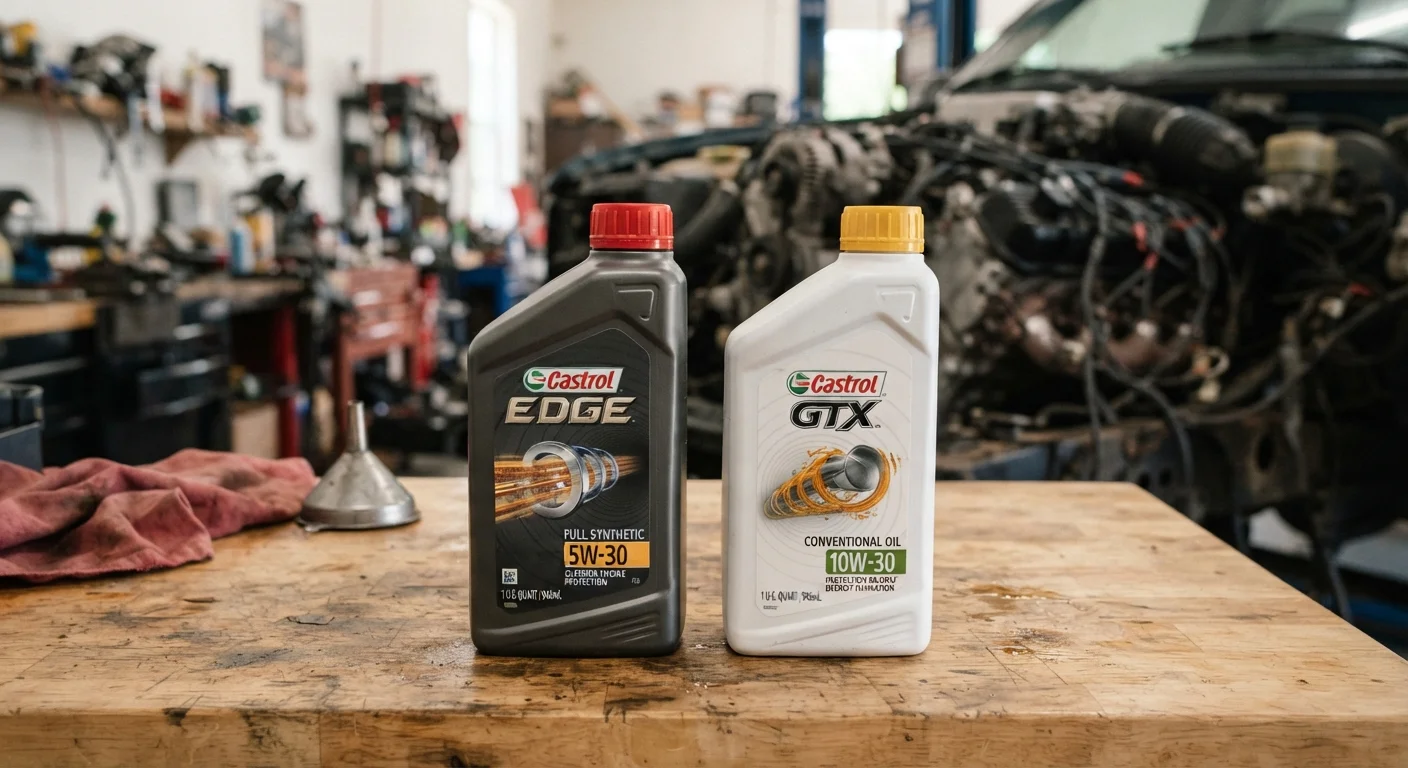
What Makes These Two Oils Fundamentally Different
At the most basic level, conventional motor oil is refined directly from crude petroleum. It contains a mix of hydrocarbon molecules of varying sizes and shapes - a natural byproduct of the refining process. Additives are blended in to improve performance, but the base stock is inherently variable in its molecular structure.
Synthetic motor oil, by contrast, starts with a chemically engineered base - often polyalphaolefins (PAOs) or other synthesized compounds. The manufacturing process creates a more uniform molecular structure, which translates into more predictable behavior across a wider range of conditions. Some synthetics are partially derived from refined petroleum (these are called semi-synthetics or blends), sitting between the two types in both performance and price.
This structural difference is the root cause of nearly every practical distinction between them - how they handle heat, cold, stress, and time.
| Criterion | Synthetic Motor Oil | Conventional Motor Oil |
|---|---|---|
| Base stock | Chemically engineered compounds | Refined crude petroleum |
| Molecular consistency | Uniform, predictable | Variable by nature |
| Cold-weather performance | Flows quickly at low temps | Thickens more in cold |
| Heat resistance | Resists breakdown longer | Oxidizes faster under heat |
| Typical change interval | Often 7,500-15,000 miles (per manufacturer) | Often 3,000-5,000 miles |
| Cost per quart | Higher | Lower |
| Best engine match | Modern, turbocharged, or high-performance engines | Older or simpler engines |
How Each Oil Performs Under Real Driving Conditions
Temperature is where the two oils diverge most visibly. In cold weather, conventional oil thickens more than synthetic, which can mean sluggish lubrication during those critical first seconds after a cold start - when much of engine wear actually occurs. Synthetic oil flows more readily at low temperatures, coating engine parts faster.
Under sustained heat - think towing, highway driving in summer, or turbocharged engines that run exceptionally hot - conventional oil breaks down and oxidizes more quickly. Synthetic resists thermal breakdown significantly better, maintaining its protective film for longer.
~80%
Engine wear occurring at cold start
Engineering research has long indicated that a significant proportion of engine wear happens in the first moments after a cold start, before oil fully circulates.
2x-3x
Longer typical change interval for synthetics
Synthetic oils commonly allow change intervals roughly two to three times longer than conventional oil, though exact intervals depend on the vehicle and manufacturer specifications.
For everyday city and highway driving in moderate climates, a quality conventional oil changed at regular intervals can do the job well in engines that don't demand synthetic. The wear difference between the two narrows considerably when maintenance is consistent.
If you're unsure where your vehicle stands, common car maintenance myths - like the old 3,000-mile oil change rule - may be influencing your habits more than your actual owner's manual is.
Making the Right Call for Your Engine
The single most reliable source for which oil your engine needs is the owner's manual. If the manufacturer specifies synthetic, use synthetic - using conventional in an engine designed for synthetic can compromise protection and, in some cases, void warranty coverage. If the manual approves conventional, you have more flexibility.
One nuance worth knowing: switching a high-mileage engine with worn seals from conventional to full synthetic can occasionally cause minor leaks, because synthetic oil is thinner and flows into gaps more readily. This isn't universal, but it's worth discussing with a qualified mechanic before making the switch on an older vehicle.
Once you've settled on the right oil type, you'll face a follow-up decision: change it yourself or hand it off to a shop. That involves its own set of trade-offs, which our guide to DIY oil change vs. taking it to a shop walks through in detail.
Synthetic Blends: The Middle Ground
Semi-synthetic or synthetic blend oils mix conventional base stock with synthetic base stock. They offer improved performance over straight conventional oil at a lower cost than full synthetic. For drivers whose manuals don't require full synthetic but who want a performance step up, blends can be a practical compromise - just verify compatibility with your vehicle's specifications.
This article provides general automotive information for educational purposes only. For guidance specific to your vehicle, consult your owner's manual or a qualified mechanic.